

HSE Researchers Assess Creative Industry Losses from Use of GenAI

Speaking at the IPQuorum.Music forum on October 15, Leonid Gokhberg, HSE First Vice Rector, and Daniil Kudrin, an expert at the Centre for Industry and Corporate Projects of HSE ISSEK, presented the findings of the first study in Russia on the economic impact of GenAI on creative professions. The analysis shows that creators’ potential losses could reach one trillion roubles by 2030.
The pace of technological innovation is accelerating every year: while it took the telephone 75 years to 'take over the world,' DeepSeek reached 100 million users in just two weeks. Today, GenAI models are rapidly gaining popularity, enabling users to generate text, video, images, and audio. There are now at least 1,000 AI models on the market designed for creative tasks and capable of competing with human creators.
Experts at HSE ISSEK have developed a unique methodology for quantifying the losses faced by authors and copyright holders as a result of the adoption of AI. The study focuses on 12 creative professions that are most vulnerable to GenAI. For the first time, researchers have estimated the share of generative content in different types of creative work and assessed the income decline experienced by 'traditional' creators who do not use neural networks. Notably, the study deliberately excludes the potential positive effects of AI, such as increased productivity and reduced barriers to entry.
The findings indicate that total income losses for members of creative professions could reach 1 trillion roubles by 2030. Programmers and developers, as well as advertising and marketing specialists, are expected to be hit the hardest. Generative models have brought new players into the creative industries, including both institutional actors—such as IT companies, developers, and digital platforms—and individuals, such as amateur creators. The production and distribution of AI-generated content by these new players pose a serious threat to the revenues of writers, translators, journalists, and composers: according to experts, AI penetration in these professions will exceed 25%.
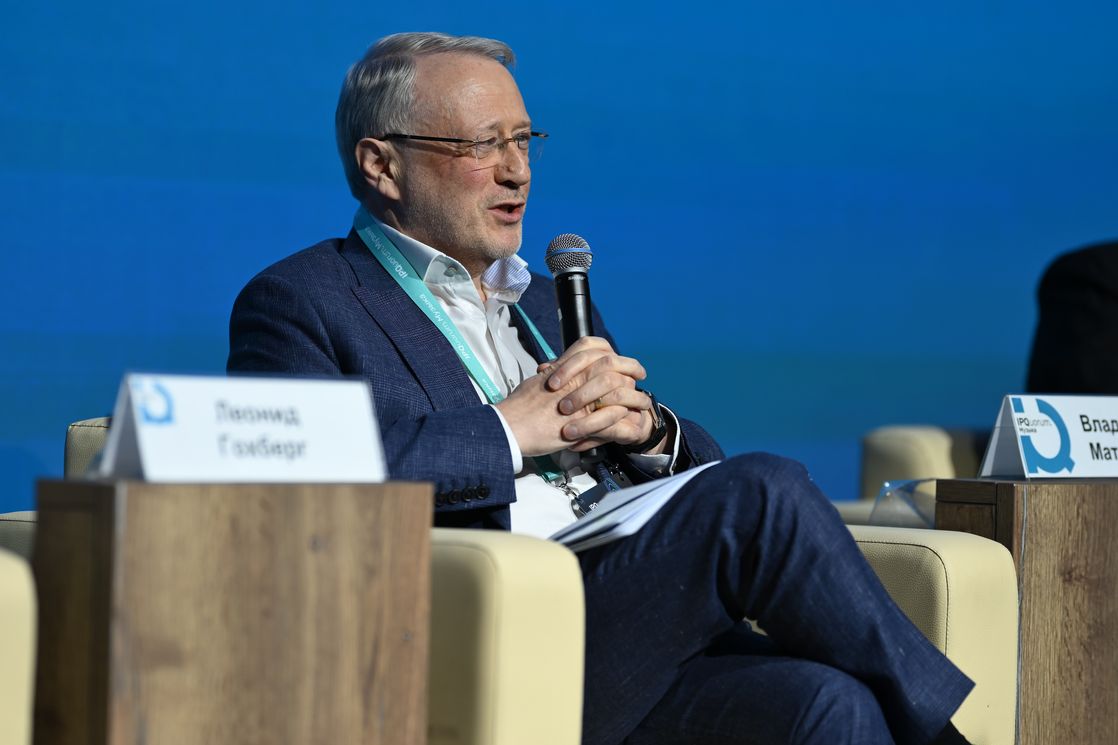
'We live in an era of exponential digital development,' says Leonid Gokhberg, First Vice Rector of HSE University. 'Innovation cannot be stopped, but it is crucial to foster a balanced dialogue between creators, technology companies, and the government. GenAI should not become a threat to creative professions. Rather, it should be viewed as a tool that complements human imagination, not replaces it.'
The researchers emphasise that current AI solutions are still far from fully replacing humans, as generative models are prone to 'hallucinations' and errors, and can pose reputational risks. In practice, AI often serves as an assistant, helping creators with editing, reference selection, translation, and technical problem-solving.
The HSE ISSEK study represents the first step toward a systematic analysis of GenAI’s impact on the intellectual property market and toward developing solutions that balance innovation with the protection of creators’ interests.
A full recording of the plenary session 'Authors in the Service of AI' is available here.

See also:

HSE University to Develop Predictive Analytics System for Icebreaker Motors
Industrial automation is one of the key applications of artificial intelligence. A predictive analytics system for large electric motors is among the solutions being developed for the industry as part of HSE University’s Strategic Technological Project ‘Multi-Agent Platform of AI Solutions for Industry-Specific Tasks.’ What is predictive analytics, how can it improve the operation of electric motors, and what specialists joined forces to develop this technology? Anton Zarubin, Dean of the School of Computer Science, Physics, and Technology at HSE University–St Petersburg and the project development coordinator, explains in this interview with the HSE News Service.
Scientific Expedition to Hainan: HSE Scientists Organise Conference on Statistical AI in China
The Statistical AI Conference was held in Sanya, Hainan Island, China, from 24 to 28 August 2026. The international event brought together leading experts in statistics, machine learning, and applied AI. Alexey Naumov, Director of the AI and Digital Science Institute at the HSE Faculty of Computer Science, and Sergey Samsonov, Head of the International Laboratory of Stochastic Algorithms and High-Dimensional Inference, were among the conference organisers.
How to Assess Students’ Knowledge in the Age of AI
A researcher at HSE University has proposed a flowchart to help lecturers decide how to assess students who use artificial intelligence. It shows where the use of AI should be restricted and where it can be incorporated into the learning process. The article has been published in IT Professional.
5th Fall into ML Conference to Bring Together Leading AI Researchers
The AI and Digital Science Institute at the HSE Faculty of Computer Science invites researchers, developers and everyone shaping the future of technology to the fifth, anniversary edition of the Fall into Machine Learning conference (Fall into ML 2026). The event will take place on October 23–24, 2026, at the HSE Cultural Centre in Moscow and will become the key meeting point for Russia’s AI community.
HSE University Expands Cooperation with Malaysia in Technology Foresight
HSE University researchers will take part in a study of the future of engineering education in Malaysia, while the Malaysian Industry-Government Group for High Technology (MIGHT) will use the iFORA big-data analysis system to validate the findings of its foresight research. These are the outcomes of a visit by HSE representatives to Kuala Lumpur.
Scientists Train Neural Network to Generate Process Plans from 3D Models
Researchers at the HSE FCS AI and Digital Science Institute have developed CAD2TechSpec, a framework that converts 3D models of mechanical parts into machining process plans—step-by-step instructions for machine tools. The solution aims to reduce the time required for the design and preparation of technical process documentation in mechanical engineering, aircraft manufacturing, and other high-tech industries. The study findings have been published in PeerJ Computer Science.
Researchers Assess Contributions of BRICS Countries to Leading ML/AI Conferences
The HSE Scientometrics Centre analysed more than 104,000 papers published between 2020 and 2025 and presented at ten top-level A* conferences ranked by ICORE 2026. The researchers examined the contributions of Brazil, Russia, India, China and South Africa. Together, these countries accounted for around 40,800 publications, or 39.2% of the total. However, the distribution is highly uneven, and a shared BRICS research space has yet to emerge.
Biologists Discover 'Molecular Fingerprint' of Preeclampsia
Researchers at HSE University employed a new method to model hypoxia in placental cells during pregnancies complicated by preeclampsia and identified molecular markers of tissue hypoxia. Since hypoxia is one of the key mechanisms underlying preeclampsia, these findings are important for a more accurate and timely diagnosis of the disease and for the development of effective treatment methods. The paper has been published in Placenta.
Laboratory of Future Networks: HSE Telecommunications Research Institute Develops 5G/6G Research Testbed
The 5G/6G testbed at the HSE Telecommunications Research Institute is becoming a research platform, an educational laboratory, and a foundation for developing new software components for future networks. It makes it possible not only to observe how a mobile network operates, but also to change its operating conditions and measure the results: data-transmission speed, latency, errors, radio-resource utilisation, and other parameters. Based on the testbed, researchers plan to develop MIMO, O-RAN, xApp, and IAB technologies, as well as experiment with artificial intelligence.
‘Hedgehog’ Versus ‘Relatives’: Researchers Measure How the Brain Responds to Unexpected Words During Natural Speech
Russian neurophysiologists, including researchers from HSE University, have demonstrated the feasibility of using event-related fields (ERFs) to study brain activity during natural speech perception. The researchers showed that this approach can be applied not only to individual words but also to continuous speech. Their findings indicate that words whose meanings differ significantly from the preceding context require longer processing times. The study also reveals that the brain processes function words in two stages: first, it identifies their grammatical role and then uses this information to predict the next word. The study has been published in Frontiers in Human Neuroscience.