

HSE Researchers Offer Guidance to Prevent Undergraduate Burnout

Researchers at the HSE Institute of Education have identified how much time students should ideally devote to their studies, extracurricular activities, and personal life to maintain strong academic performance without compromising their mental health. An analysis of responses from 2,753 students, combined with their actual academic results, revealed several risk factors—such as excessive homework—as well as positive factors, including sufficient sleep, regular exercise, and moderate participation in projects. Based on these findings, the researchers developed practical recommendations for both students and universities. The paper has been published in the European Journal of Education.
Higher education today often faces two extremes. On one hand, students are encouraged to participate actively in extracurricular activities; on the other, they are burdened with heavy academic workloads. Extracurricular involvement helps students develop interpersonal and teamwork skills, boosts their self-confidence, expands their social networks, and ultimately supports their future employability. However, excessive involvement in extracurricular activities can lead to burnout, stress, and lower academic performance. Some students may even sacrifice their academic responsibilities to participate in extracurriculars, which can negatively affect their grades. Until now, it has been unclear how to balance these different types of activities in an optimal way.
Researchers at HSE University—Natalia Maloshonok, Leading Research Fellow at the Institute of Education, Irina Shcheglova, a visiting lecturer, and Oksana Dremova, Deputy Director of the Centre for Institutional Research—conducted an online survey of 2,753 undergraduates at a highly selective Russian university in Moscow (all data was anonymised). Data collection took place from December 2021 to February 2022
To assess how undergraduates allocate their time across curricular and extracurricular activities, the researchers asked them how many hours per week they spend on paid work (both on and off campus), attending classes, recreational activities, homework, volunteering, sports, student clubs, socialising with friends, spending time with family, and at-home entertainment. The responses were grouped into several categories based on the amount of time spent on each activity, ranging from 0 hours to 31 hours or more per week. Students were also asked about their sleep habits, with response options ranging from 5 hours per night to 8 hours or more.
The researchers then matched the survey responses with administrative records of students’ academic performance. They also assessed levels of anxiety and depression using validated psychological questionnaires. Depression was measured using the Russian translation of the PHQ-9 (Patient Health Questionnaire–9), while anxiety was assessed with the Spielberger State–Trait Anxiety Inventory (STAI).
Attending classes and completing homework are both associated with strong academic performance. However, excessive homework (more than 25 hours per week) is correlated with higher levels of depression. Interestingly, attending more than 26 hours of classes per week did not show a similarly negative association with mental health.

Natalia Maloshonok
'Independent work on assignments and the mastery of new material both require strong self-regulation skills. Students must set their own learning goals, manage their time and work environment, stay motivated, monitor their progress, and evaluate and improve the effectiveness of their learning. In contrast, classroom learning is largely structured and supported by the instructor, making it an easier and less demanding format for many students. As a result, guided learning may support students’ mental well-being by reducing psychological stress and placing fewer demands on self-regulation skills,' according to Maloshonok.
Extracurricular work at the university, as well as participation in research activities and applied projects, had the strongest positive impact on academic performance. However, the researchers identified a threshold: these activities were beneficial only up to about 10 hours per week. Attending extracurricular events—such as lectures and master classes—once every three to six months also had a positive effect on academic performance, whereas more frequent participation did not. As for volunteering, spending six or more hours per week on it was associated with increased anxiety among students.
'Volunteering, like professional activities that involve helping others, is often linked to negative mental health outcomes, including burnout, depression, and high stress levels. For undergraduates without proper training, volunteering can be particularly challenging, especially when combined with a heavy academic workload. Such students may struggle to manage stressful situations on their own. Consequently, excessive involvement in volunteering during university studies can have detrimental effects on mental health,' says Maloshonok.
One of the key insights of the study was the importance of leisure activities, sports, family time, and socialising with friends. Neglecting rest in favour of studying and extracurricular activities was found to undermine both academic performance and mental health. Students who slept 7 to 8 hours on weekdays had significantly higher academic performance and were far less likely to experience depression and anxiety compared to those who slept only 5 to 6 hours.
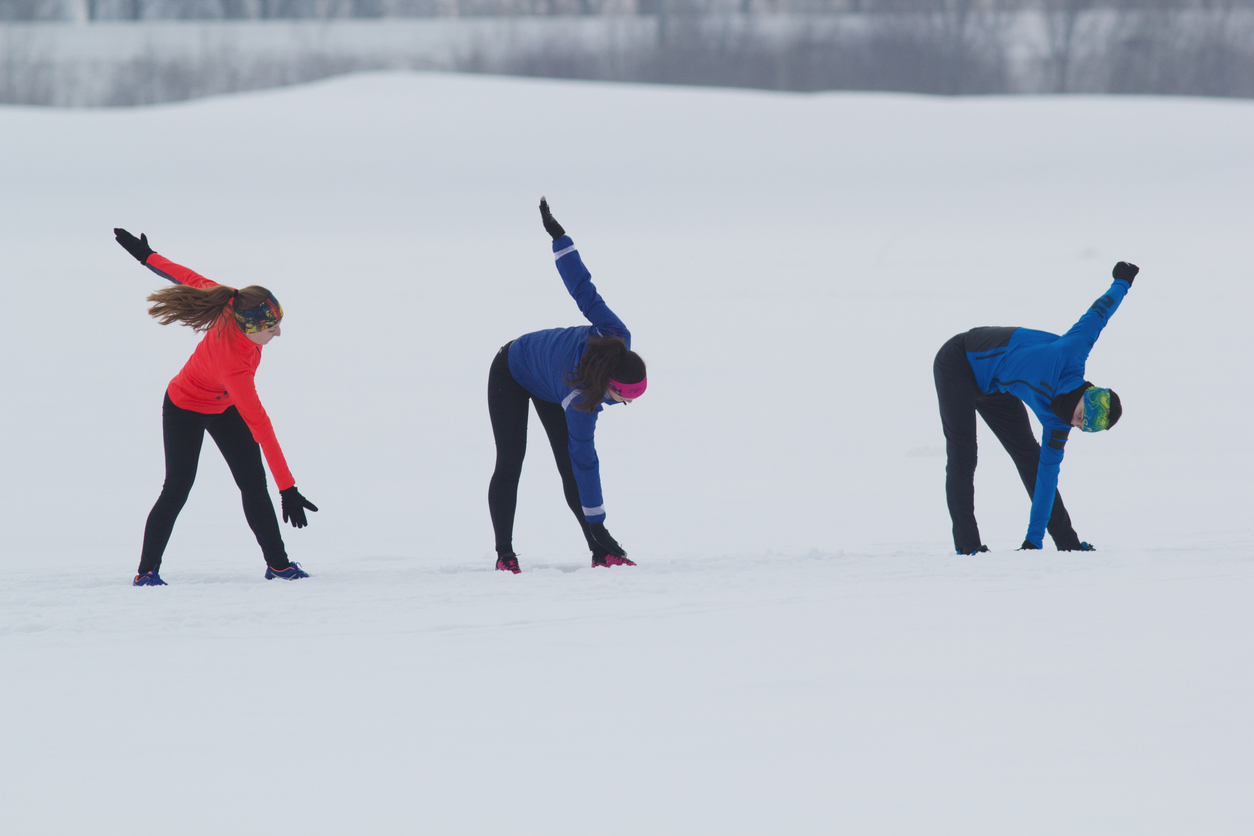
Additionally, exercising for 1 to 5 hours per week was associated with a significant reduction in anxiety and depression, with greater benefits observed at higher levels of activity. Spending more than 11 hours per week with friends and family outside the home was also linked to better mental health. In contrast, engaging in leisure activities at home for more than 15 hours per week was associated with higher levels of anxiety. The researchers suggest that spending so much time at home may reflect procrastination or social isolation, which are likely contributors to increased anxiety.
The researchers recommend that students limit extracurricular activities to no more than 10 hours per week and avoid overextending themselves with volunteering or organising events at university. Making time for sleep and socialising is just as important for academic success as attending lectures. For universities and faculty, the researchers recommend limiting homework so that students’ total workload does not exceed 25 hours per week. They also suggest emphasising the completion of assignments in the classroom rather than at home.
'It is important to inform students about the risks of overwork, promote time management and work–rest balance, and provide psychological support to those who are actively involved in organising extracurricular activities at the university,' Maloshonok notes.
For the first time in Russia, the study at HSE University identified optimal workloads for both curricular and extracurricular activities, outlining a balanced approach to student engagement.

See also:

Physicists Discover What Happens Inside a Stable Vortex
Large vortices with characteristic spiral arms are often observed in the atmosphere and the ocean. Physicists from HSE University have explained how these structures form and why they retain their shape. The researchers found that velocities at points located along the same vortex arc remain correlated even over long distances. At the same time, this correlation weakens rapidly with increasing distance from the vortex centre. These differences help explain the formation of spiral arms and may improve models of atmospheric and oceanic currents. The findings have been published in Physical Review Fluids.
‘The Peak of Stupidity’ and ‘The Valley of Despair’: HSE Economists Propose an Explanation for the Dunning–Kruger Effect
The Dunning–Kruger effect, which describes a sharp surge in self-confidence among beginners followed by an equally rapid decline as they gain experience, can be explained by the nature of the learning process and the acquisition of new knowledge. This conclusion was reached by Andrey Vorchik of the HSE Faculty of Economic Sciences together with independent researcher Murat Mamyshev. They developed a mathematical model of learning and demonstrated how subjective confidence is formed and changes as knowledge accumulates, as well as how teachers can reduce the ‘valley of despair’ experienced by learners.
Toffee and Risk: Scientists Discover Why People Who Crave Sweets Make More Impulsive Choices
Having a sweet tooth may be linked not only to eating habits but also to the way people make decisions. Researchers at HSE University have found that people with a preference for sweet foods tend to behave more impulsively—not because they want immediate rewards, but because they are less willing to tolerate uncertainty. These findings may help improve treatments for addiction. The study findings have been published in Frontiers in Psychology.
Physicists Find a Way to Model Ion Parameters in Plasma in Seconds
Researchers from HSE University and the Moscow Institute of Physics and Technology (MIPT) have developed a set of simple analytical methods for calculating the properties of heavy ions in helium under the influence of a strong electric field. The new approach speeds up calculations of ion mobility and ion–molecule reaction rates by thousands of times while maintaining sufficient accuracy for plasma jet modelling. The findings have been published in the journal Physica Scripta.
Two Years of Growth or Decline: How to Choose an Investment Strategy
Economists from HSE University, together with colleagues from international universities, have analysed stock market movements over almost a century and proposed an investment strategy that could have delivered returns nearly twice as high as the market average. Their research suggests following a momentum strategy during periods of sustained market growth and switching to a value strategy after prolonged market declines. The study has been published in the Journal of Banking and Finance.
Researchers Reveal Link Between Attention and Communication Difficulties in Autism
Researchers at HSE University have examined how communication difficulties in children with autism are related to brain function. The findings show that not only language networks but also attention networks play an important role. The weaker the connections involved in maintaining focus and switching attention, the more pronounced communication difficulties were. The study has been published in European Child & Adolescent Psychiatry.
Scientists Discover Why Some People Wore Masks During COVID-19 While Others Did Not
Why do some people voluntarily follow new rules while others ignore them? Researchers at HSE University have found that the answer lies not so much in people's willingness to cooperate, as previously believed, but in their ability to empathise with others. Empathy proved to be the strongest predictor of whether people chose to wear face masks voluntarily during the COVID-19 pandemic. The findings have been published in Frontiers.
Physicists at HSE University and FIAN Discover Way to 'Photograph' Sound for Testing Materials Used in 6G Communications
Researchers at HSE University, in collaboration with colleagues from the Lebedev Physical Institute of the Russian Academy of Sciences (FIAN), have developed a method for rapidly determining how firmly a film is bonded to a substrate. This is important for the creation of ultrahigh-frequency acoustic filters, which are key components of next-generation 5G and 6G communications. For the first time, researchers have succeeded in measuring the lateral rigidity of the bond between a two-dimensional material film and a substrate in this way. The study results have been published in Applied Physics Letters.
Scientists Create Open Dataset for Studying Concentration
A team of Russian researchers, including scientists from HSE University–St Petersburg, has developed the first open multimodal dataset containing recordings of brain activity, heart function, and video observations to help researchers understand what happens in the human brain during deep concentration. In the future, the dataset could accelerate the development of neural interfaces, rehabilitation technologies, and AI systems. The article has been published in Scientific Data.
Scientists Propose Method for More Efficient Resource Use in Machine Learning
An international group of researchers, including mathematicians from the AI and Digital Science Institute at the HSE Faculty of Computer Science, has provided a theoretical justification for a simple and computationally efficient method of estimating uncertainty in Stochastic Gradient Descent (SGD). The paper has been published on the scientific preprint server arXiv.org and presented at AISTATS 2026.