

Urban Studies Experts from HSE Discuss Cooperation Prospects with Chinese Partners
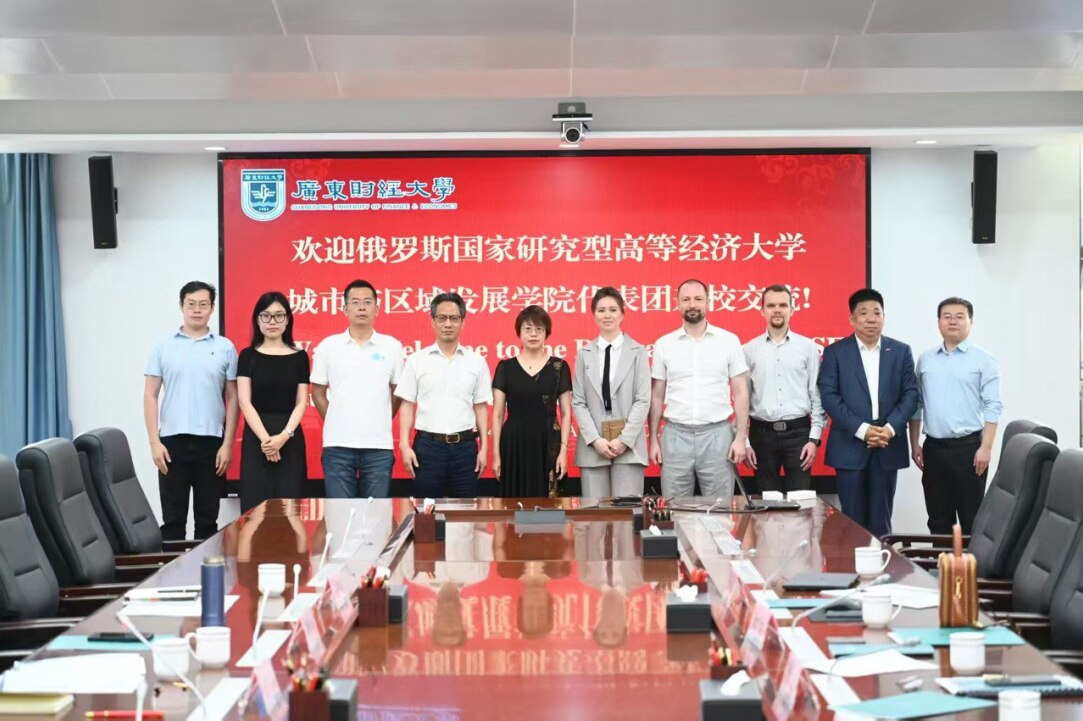
The team of the HSE Faculty of Urban and Regional Development (FURD) has held a series of meetings with partners in China as part of its working visit focused on advancing cooperation. The agenda included urban and agglomeration ranking research, the development of unique educational programmes in urban studies, and other key topics.
Dean of FURD Evgeny Mikhaylenko, Deputy Dean for International Affairs Victoria Khomich, and Head of the Vysokovsky Graduate School of Urbanism Ruslan Goncharov met with partners in Guangzhou and Shenyang. Notably, they held talks with the leadership of the Guangdong–CIS International Technological Cooperation Union—one of the faculty’s key partners in China. Discussions centred around joint projects such as urban and agglomeration ranking studies, academic exchanges with Chinese universities, and FURD’s planned participation in the Global Mayors’ Forum in Guangzhou in 2025.

Evgeny Mikhaylenko
‘Joint Russian–Chinese research in the field of urbanism will help tackle complex governance challenges in both major metropolitan areas and smaller towns, as well as identify development prospects. We are continuing to expand our collaboration in scientific research and plan to launch a joint educational project in the future,’ said Dean of the HSE Faculty of Urban and Regional Development Evgeny Mikhaylenko.
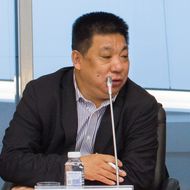
Guo Fengzhi
Guo Fengzhi, Secretary General of the Guangdong–CIS International Technological Cooperation Union, expressed gratitude to the FURD delegation for their friendly visit to China. ‘We held effective negotiations on a number of key areas concerning scientific and technological innovation, educational collaboration, experience exchange, and project cooperation,’ said Guo Fengzhi. ‘The faculty has long been our partner and works successfully with many regions of China. I believe the meetings in Guangzhou and Shenyang will contribute significantly to the development of Russian–Chinese relations, and we look forward to strengthening our longstanding cooperation.’
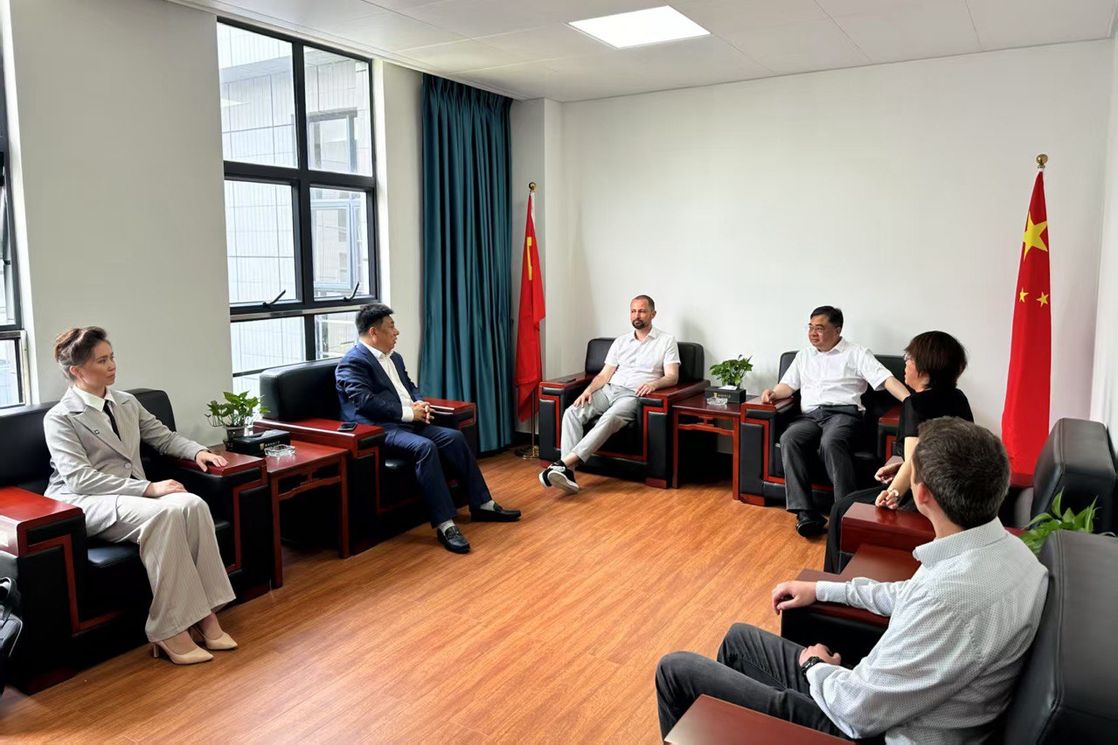
During a meeting at South China University of Technology in Guangzhou—a long-time partner of FURD—the parties discussed the joint development and implementation of innovative international programmes in urban studies. Following the talks, Russian and Chinese scholars agreed to begin designing an academic programme that will combine the unique expertise of both sides and aims to be a cutting-edge international educational product.


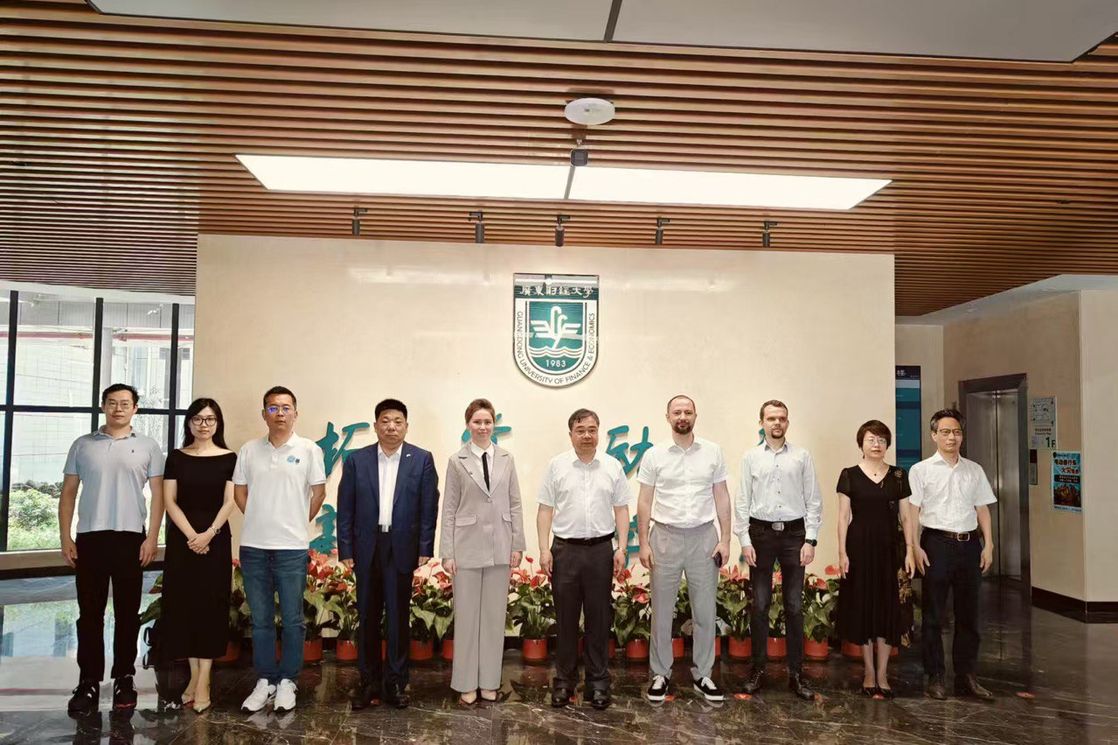
At Guangdong University of Finance and Economics (GUFE), which the FURD delegation visited in return following a Chinese visit to HSE in April, discussions focused on expanding academic exchange opportunities, organising summer schools, and conducting joint research within BRICS urban contexts. Moreover, GUFE’s urban studies team is planning a return visit to FURD in July 2025 to finalise cooperation plans and sign a partnership agreement.

In northern China, in Shenyang, the FURD team was received by representatives of the Shenfu Reform and Innovation Demonstration Zone Management Committee, headed by Deputy Director Liu Jia, who visited FURD in 2024. During their working meeting, both sides agreed to establish a joint mechanism for academic exchanges between HSE and Shenyang universities, as well as plans for joint international events within the BRICS framework.


Victoria Khomich
‘FURD is one of Russia’s most recognisable centres of urban expertise—from the north to the south of China. Our collaboration with educational institutions, municipalities, and urban development committees in special economic zones continues to open up new opportunities for experience exchange and integration of the faculty’s potential into the international space,’ said Victoria Khomich. ‘Joint international projects like the Urban and Innovation Environment Index and the Dynamic Urbanistics initiative—winner of HSE’s International Academic Cooperation competition in partnership with Tianjin University—demonstrate how collaborative efforts with international colleagues yield truly unique results. Our next ambitious goal is to launch an international educational programme.’

Ruslan Goncharov
‘The Vysokovsky Graduate School of Urbanism has always welcomed international cooperation. Our ambition is to become a recognised expert centre in urban development across BRICS countries—and we are steadily moving in that direction. At present, our team is studying best practices in the development of small towns in several BRICS countries, including China, and assessing how applicable they are to the Russian context. We will present interim results of this research at the Vysokovsky Forum on June 5, 2025, and I take this opportunity to invite everyone to attend. We have excellent relations with our Chinese colleagues, and we are grateful for the warm welcome and active support of our research initiatives. We eagerly look forward to putting all our plans into action,’ concluded Ruslan Goncharov.

See also:

HSE and Karakalpak State University Agree on Cooperation
HSE University and Berdakh Karakalpak State University have signed a cooperation agreement to strengthen collaboration in research, education, and innovation. Through the expertise of its Сentre of Digital Technologies for Nature-Based Solutions of the Carbon Measurement Supersites Programme, HSE University will work with colleagues from Uzbekistan to assess climate risks and evaluate opportunities for implementing nature-based climate projects in the region. The partners also plan to develop joint research and educational programmes.
‘We Are Always Open to Collaboration, and China Is One of Our Most Important Partners’
From July 20 to 27, 2026, the HSE Faculty of Urban and Regional Development (FURD) is hosting a summer school for students from Tianjin University dedicated to the preservation of cultural heritage. Throughout the week, participants have attended lectures, practical workshops, and field visits to some of Moscow’s most iconic heritage sites. The summer school is the faculty’s first international programme of this kind and forms part of the expanding educational cooperation between Russia and China.
Physicists at HSE University and FIAN Discover Way to 'Photograph' Sound for Testing Materials Used in 6G Communications
Researchers at HSE University, in collaboration with colleagues from the Lebedev Physical Institute of the Russian Academy of Sciences (FIAN), have developed a method for rapidly determining how firmly a film is bonded to a substrate. This is important for the creation of ultrahigh-frequency acoustic filters, which are key components of next-generation 5G and 6G communications. For the first time, researchers have succeeded in measuring the lateral rigidity of the bond between a two-dimensional material film and a substrate in this way. The study results have been published in Applied Physics Letters.
HSE University and Peking University Expand Their Partnership
Peking University President Gao Song paid his first visit to HSE University as part of his first overseas trip since taking office in May 2026. The main purpose of the talks was to consolidate existing areas of cooperation and expand joint projects between HSE University and Peking University within the framework of the Cross Years of Russia–China Cooperation in Education (2026–2027).
Biologists Discover Unique Properties of MiR-93-5p MicroRNA in Prostate Cancer
Researchers at the International Laboratory of Microphysiological Systems of the HSE Faculty of Biology and Biotechnology investigated how different isoforms of the same microRNA influence gene function in prostate adenocarcinoma. The study found that in some cases, microRNAs can reinforce each other’s effects by targeting and suppressing the same genes. This finding offers a fresh perspective on the molecular mechanisms underlying tumour development and on the search for disease biomarkers. The results have been published in PeerJ.
Researchers Discover How Spelling Errors Slow Down Reading in Russian
Psycholinguists from the Centre for Language and Brain at HSE University–St Petersburg have shown that words that are frequently misspelled are processed more slowly by readers, even when presented with the correct spelling. The researchers confirmed this effect for the first time using Russian-language materials and found that response speed is most strongly linked to how confidently individuals can distinguish the correct spelling of a word from an incorrect one. The study has been published in The Mental Lexicon.
HSE Economists Reveal How the Wage Gap Emerges Among Vocational School Graduates
HSE researchers examined the careers of 600,000 graduates of Russian secondary vocational education programmes and found that at the start of their careers, the gender wage gap reaches 23%, doubling after three years. This disparity is largely due to male and female students choosing different occupations when enrolling in vocational schools. These were the findings made by Sergey Roshchin, Natalya Yemelina, and Ksenia Rozhkova from of the HSE Faculty of Economic Sciences. The article has been published in Educational Studies.
HSE Researchers Make Aldehydes Perform Dual Function
Chemists from HSE University have discovered a way to carry out a reductive addition reaction without using an external reducing agent. Instead, the required 'resource' is supplied by the aldehyde itself, one of the reaction participants. This approach helps prevent unwanted side reactions, reduces toxicity, and simplifies the production and synthesis of organic molecules, including those used in the manufacture of medicines. The study has been published in Journal of Catalysis.
Education in a Changing World: Russian–Chinese Dialogue in Beijing
How are universities, vocational education systems, and researcher training programmes evolving in response to new challenges? These questions were at the heart of the international forum ‘Reconfiguring Education in a Changing World: Russia–China Dialogues on Higher Education, Skills, and Research Training’, held in China in mid-June. The event was jointly organised by the HSE Institute of Education and the Graduate School of Education of Peking University, which hosted the forum on its campus.
HSE University and Unicamp Develop Partnership Projects
At the end of May, HSE University in Moscow received a delegation from the State University of Campinas (Unicamp, Brazil), which has held a strong, long-standing partnership with HSE. The meeting in Moscow took place as part of the International Partner Week, which was held from May 19 to 22 by HSE University–St Petersburg. The event was attended by Unicamp representatives: Rafael Dias, Director of International Affairs, and Milena Serafim, Associate Director of the Faculty of Applied Sciences.