

'We Are Creating the Medicine of the Future'
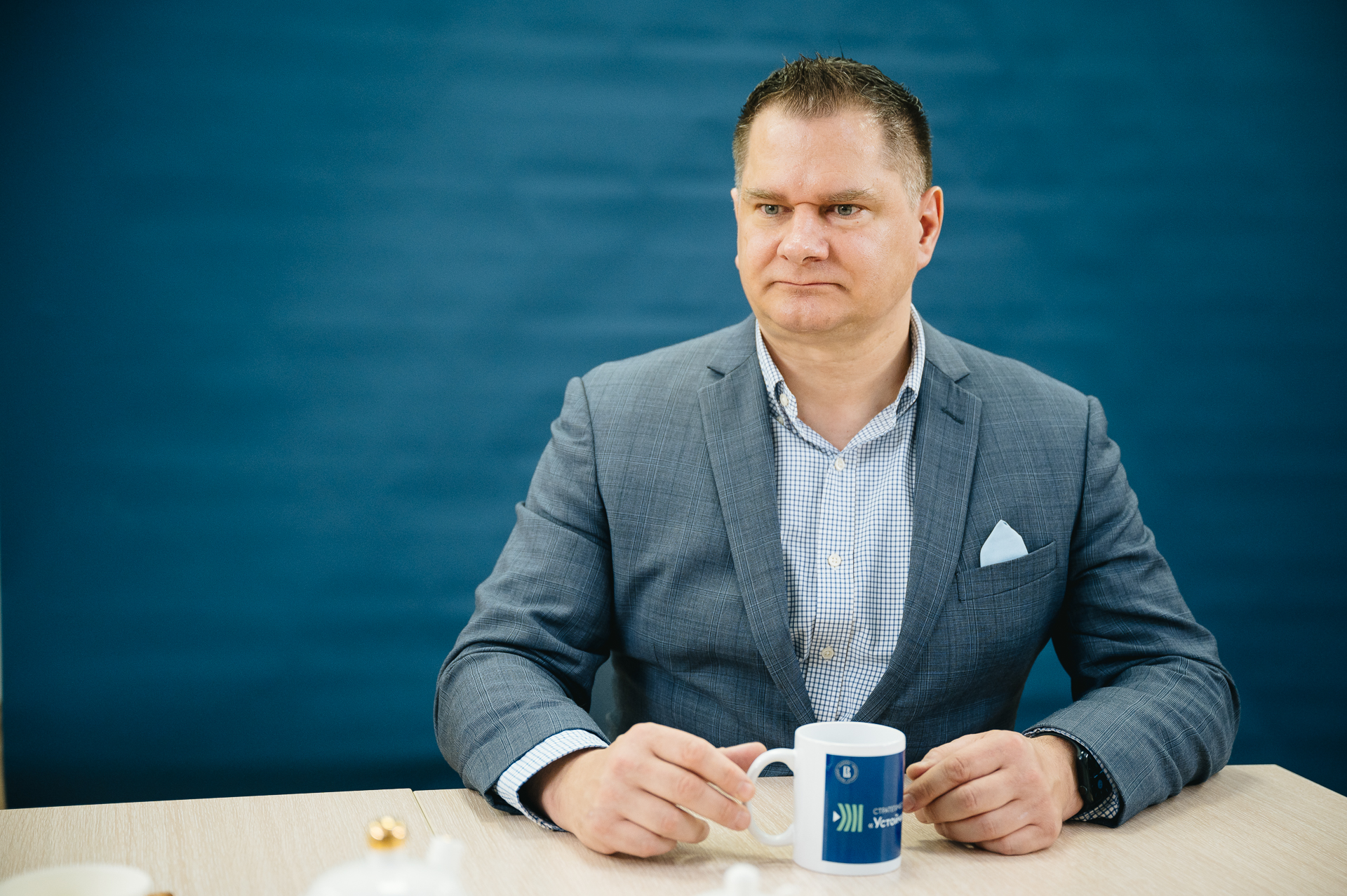
Dr Gerwin Schalk is a professor at Fudan University in Shanghai and a partner of the HSE Centre for Language and Brain within the framework of the strategic project 'Human Brain Resilience.' Dr Schalk is known as the creator of BCI2000, a non-commercial general-purpose brain-computer interface system. In this interview, he discusses modern neural interfaces, methods for post-stroke rehabilitation, a novel approach to neurosurgery, and shares his vision for the future of neurotechnology.
Brain-Computer Interfaces
Neural interfaces are technologies that establish a direct connection between the brain and a computer. Special devices, such as electrodes placed on the scalp, on the brain's surface, or within the brain, are used to detect brain signals. These signals are then processed and converted into meaningful information, which can be transmitted to electronic devices such as computers, prosthetics, or speech synthesisers.
Just as smartwatches or other wearable devices give us useful information about our body, such as heart rate or the number of our steps, neurotechnology can provide important information about the health of our brain or can even help to improve it. In contrast to wearable devices, neurotechnologies are currently still used almost exclusively in laboratory settings and in limited testing in the clinic. For example, clinicians use them for rehabilitating patients after strokes or brain injuries, restoring speech functions, and performing neurosurgical procedures.
I have spent my career understanding the neural basis of neurotechnologies and on facilitating their transition into wider areas of research and the clinic. Indeed, my BCI2000 software is now the most widely used software for studying neurotechnologies. My team and I have been developing this software for nearly 25 years, and there is still quite some room for further improvements. Essentially, BCI2000 is similar to Linux or Android systems since it can be used across various applications.
A New Approach to Rehabilitation
Many post-stroke patients experience a loss of motor or speech functions. Conventional rehabilitation methods involve regular therapy sessions at specialised clinics. Patients are asked to repeat specific words or phrases multiple times and perform various exercises.
However, this approach has several limitations: therapy sessions can only take place at a facility under professional supervision. It can be inconvenient for patients, complicated, and expensive. Additionally, once patients return home, they often discontinue therapy sessions and miss the opportunity for a full recovery.

Together with HSE, we have been developing a new rehabilitation system that uses neurotechnologies. It is designed to aid language recovery in patients with aphasia who have lost the ability to speak coherently and express their thoughts following illness or injury. Instead of repeating phrases, patients are invited to play a game. Special sensors are attached to the head to monitor brain signals. The person sees a picture on the screen and hears several words, one of which corresponds to the image. The brain must identify the correct word. If the system can detect from the brain signal that the person identified the correct word, the person receives a reward such as a smiley face. In this way, even individuals who have lost the physical ability to speak can engage in this exercise.
We now have a prototype of this system. Our next goal is to make it accessible and understandable to people without specialised knowledge. The system should be extremely simple, allowing anyone to use it, including junior medical staff at any hospital. Patients only need to place a special device on their head and begin playing.
Today, neurotechnology for rehabilitation is like a delicate young sprout. To allow it to grow stronger and flourish, we cannot immediately place it in the heart of a dense forest. We must cultivate it separately and only then integrate it into the broader environment. In our case, that means the healthcare system. This is a crucial and challenging task that requires time, expertise, effort, and patience. We are gradually creating a new model of medicine that will not replace but complement the existing one, which is primarily based on pharmacological solutions.
Invasive Neurotechnologies: A Revolution in Neurosurgery
Another important application of neurotechnologies is functional brain mapping. In brain surgery, eg when removing tumours, it is critically important to identify areas of the brain that control movement, language, and other functions. The surgeon does not always see the tumour’s boundaries, as it may not visually differ from the surrounding tissue. Meanwhile, the cost of an error in neurosurgery is extremely high: if too much tissue is removed, the patient could lose the ability to walk or speak.
Conventional brain mapping methods involve electrical stimulation of the brain. A clinician applies an electrical current to a specific area of the patient's brain, and if the patient's arm twitches or they stop speaking, it indicates that the area is responsible for motor or language functions, respectively. This process requires significant patient involvement directly on the operating table. Additionally, electrical stimulation can sometimes trigger seizures.
We have developed a simpler and safer method that analyses brain signals while the patient performs simple tasks. We use electrocorticography, which involves placing electrodes directly on the surface of the brain. The patient performs several tasks simultaneously, such as speaking, sticking out their tongue, and moving their hand. We monitor brain signals, and if we detect an increase in activity in a specific area, we can infer that this region is involved in the corresponding function. Brain mapping requires a personalised approach. While everyone's brain is generally structured similarly, functions are located in slightly different areas in different people, and tumours can further distort these areas. Therefore, for the surgeon to operate with precision, it is essential to map each individual functional area of the brain.
Neurotechnologies of the Future
There is extensive media coverage of neuroprostheses—electronic implants that help people regain the ability to walk, see, or hear. Last year, my colleagues and I demonstrated that we could read brain signals and convert them into natural-sounding speech. We were able to recreate a Pink Floyd song by analysing neuronal activity. This work contributes to neuroprostheses that can restore speech function. While all of this may seem ambitious, futuristic, and reminiscent of science fiction novels, we will initially only be able to help some people.
In the case of neuroprostheses, we restore a lost ability in a patient—whether it's the ability to walk, see, hear, or speak—without altering anything in the brain itself. In the case of rehabilitation using neurotechnologies, we aim to reorient the functioning preserved part of the brain to take over functions that were previously controlled by other areas. These changes may be less spectacular, but they are much deeper and more complex, with potential and benefits that are far greater.
To pursue these exciting goals, we don't necessarily need to invent completely new technologies, but we certainly need to continue to learn how to configure the existing ones correctly and effectively. It is important to integrate these technologies into clinical practice, train clinicians, and earn the trust of patients. It's a long journey ahead, but we are already at the start of a new revolution in medicine.
Translating neurotechnologies into practical devices for monitoring health in everyday life is one of our primary goals. They should become a valuable tool for monitoring personal health, and should be accessible to everyone, not just to clinicians and researchers. For example, a person may wear a headband while sleeping and receive a report in the morning about the quality of their sleep, the state of their nervous system, and stress levels, along with recommendations on how to improve their lifestyle—such as reducing alcohol consumption, going to bed earlier, or exercising more. If we can 'translate' brain signals into meaningful information, it will mark a significant step forward in preventive medicine.

See also:

When Pictures Hinder Understanding: Illustrations May Impede Learning of Abstract Ideas
Illustrations can help remember specific actions but do not always make abstract ideas easier to learn. Researchers from HSE University and Humboldt University compared how people learn from texts with different levels of abstractness. They found that participants remembered illustrations better and performed better on related tasks after reading a multimedia text about yoga asanas than after reading an abstract text about the Nash equilibrium. The findings could help improve the selection of illustrations for educational and informational materials. The study has been published in Learning and Instruction.
HSE University to Develop Predictive Analytics System for Icebreaker Motors
Industrial automation is one of the key applications of artificial intelligence. A predictive analytics system for large electric motors is among the solutions being developed for the industry as part of HSE University’s Strategic Technological Project ‘Multi-Agent Platform of AI Solutions for Industry-Specific Tasks.’ What is predictive analytics, how can it improve the operation of electric motors, and what specialists joined forces to develop this technology? Anton Zarubin, Dean of the School of Computer Science, Physics, and Technology at HSE University–St Petersburg and the project development coordinator, explains in this interview with the HSE News Service.
How to Assess Students’ Knowledge in the Age of AI
A researcher at HSE University has proposed a flowchart to help lecturers decide how to assess students who use artificial intelligence. It shows where the use of AI should be restricted and where it can be incorporated into the learning process. The article has been published in IT Professional.
Scientists Train Neural Network to Generate Process Plans from 3D Models
Researchers at the HSE FCS AI and Digital Science Institute have developed CAD2TechSpec, a framework that converts 3D models of mechanical parts into machining process plans—step-by-step instructions for machine tools. The solution aims to reduce the time required for the design and preparation of technical process documentation in mechanical engineering, aircraft manufacturing, and other high-tech industries. The study findings have been published in PeerJ Computer Science.
Biologists Discover 'Molecular Fingerprint' of Preeclampsia
Researchers at HSE University employed a new method to model hypoxia in placental cells during pregnancies complicated by preeclampsia and identified molecular markers of tissue hypoxia. Since hypoxia is one of the key mechanisms underlying preeclampsia, these findings are important for a more accurate and timely diagnosis of the disease and for the development of effective treatment methods. The paper has been published in Placenta.
‘Hedgehog’ Versus ‘Relatives’: Researchers Measure How the Brain Responds to Unexpected Words During Natural Speech
Russian neurophysiologists, including researchers from HSE University, have demonstrated the feasibility of using event-related fields (ERFs) to study brain activity during natural speech perception. The researchers showed that this approach can be applied not only to individual words but also to continuous speech. Their findings indicate that words whose meanings differ significantly from the preceding context require longer processing times. The study also reveals that the brain processes function words in two stages: first, it identifies their grammatical role and then uses this information to predict the next word. The study has been published in Frontiers in Human Neuroscience.
HSE Researchers Create New Corpus of Early Child Speech in Russian
Researchers at the HSE Centre for Language and Brain have presented RusLan-M, an open multimedia corpus that makes it possible to trace the development of early child speech in Russian from first words to the emergence of complex grammatical constructions. The database contains around 41 hours of video recordings and more than 35,000 child utterances. The new resource will help researchers study more precisely how children acquire Russian and, in the longer term, develop more reliable tools for assessing speech development. The study has been published in Language Resources and Evaluation.
Scientists Develop New Solution for 6G Communication Systems
A terahertz neuromorphic circuit developed by scientists at HSE University could make 6G communication systems both more accurate and energy-efficient. The circuit enables indoor tracking of mobile devices with an accuracy of up to 99%. The results were presented at PIERS 2026, an international symposium on Photonics and Electromagnetism held in China.
Scientists Develop Algorithm for More Reliable Processors in Data Centres
Researchers from HSE MIEM and Samara University have developed the LRF-3D algorithm to automatically bypass idle nodes in three-dimensional networks-on-chip. Thanks to its hierarchical architecture, the algorithm outperforms existing solutions in both speed and path accuracy, improving processor reliability for use in data centres, supercomputers, and AI computing. The source code and test results are publicly available.
Researchers Rank Recommendation Algorithms Using Sports Tournament Model
Researchers from the AI and Digital Science Institute at the HSE Faculty of Computer Science have developed an approach for selecting recommendation algorithms more effectively. Their approach uses pairwise comparisons of algorithms to create a tournament table, with the overall ranking based on their performance across all datasets in the tournament. This can reduce the number of algorithms that need to be tested when developing new services, saving both time and money. The study was presented at the 32nd ACM SIGKDD Conference on Knowledge Discovery and Data Mining (KDD 2026).