

‘AI Will Apply to All Activities, Having a Great Effect on Economy’

Artificial Intelligence (AI) has become a fundamental component of many activities in economics and finance in recent years. On April 26, Panos Pardalos, Academic Supervisor at the Laboratory of Algorithms and Technologies for Networks Analysis (LATNA at HSE Nizhny Novgorod) and Distinguished Professor of Industrial and Systems Engineering at the University of Florida, will talk about its impact, future developments and limitations in his honorary lecture Artificial Intelligence (AI) in Economics and Finance.
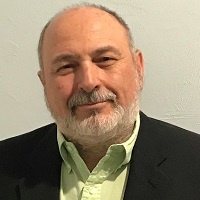
Panos Pardalos
Professor Pardalos started the LATNA laboratory with a mega-grant in 2011 and has been awarded the medal 'Recognition — for contribution to science and education'. Today, the laboratory is a recognized international centre carrying out research in the field of computer science and its applications.
AI As the Field of Fields
We know today that technology enhances our activities. We can see better with microscopes, we can sense better with sensors, and we can compute faster with computers. And AI is a tool for all these things. A lot of science fiction was based on it. However, now AI is so important that it is a nationally prioritized issue in many countries, such as the United States, China, Europe, Canada.
We see that the number of patents in the AI has increased a lot. China has been number one for the last few years in terms of the number of patents. AI as a technology is like electricity. If you asked Edison about the impact of electricity in the society, he would have said it is the field of the fields—it is that important. Now, AI is s the field of the fields. It has an impact in every aspect of life, especially, the economy, because of the impact in production. If we look at automation—what would we do today without electronics?
Machine learning is another tool —it is also essential for AI and data analysis today. Then there is also the blockchain technology. Blockchain is a good thing, but AI and blockchain together are used for transactions in the systems that are organized globally. Most importantly, it is a national security issue. AI is involved everywhere—we use expert systems and machine learning. AI is used to describe machines performing human-like cognitive tasks. It has been used for the last 10-15 years, and there is a huge competition among different countries, which is very important, because competition drives a lot of things.
Predicting the Economic Failures
In my talk, I will discuss the general importance of AI in finance and economics. Then I will focus on more specific examples, on some things that I have done with my students.
During my years in Russia, I’ve tried to analyse the dynamics of financial markets. And in fact, for the first time, we did an analysis of the Russian stock market. That was a difficult task, because the data was very difficult to get
We analysed the Russian stock market along with many other emerging markets, particularly the BRICS ones. You cannot ignore these countries, because they have huge populations, huge consumer power, and it is very important to see what the effects of globalization are.
We use sensitive machine-learning ideas to predict economic failures. Sometimes you see the stock market clashes nobody predicted. After a clash happens, people develop techniques and say ‘oh, we can predict it’. But this is called ‘a posteriori analysis’ — after it happened. It is a useful study, but it’s good to know whether we can predict the future. It’s not easy.
Using AI in Financial Report Analysis
In my talk at the April Conference I’ll examine some different issues that have to do with companies, their annual reports, and the impact of what is called ‘mirror computing’, which is a new type of thinking in computing. It is not entirely new as it has been around for some time, but now it has become more successful.
The main problem is how to get data. The regulations in many countries force the companies to make their annual reports public. Sometimes companies cut and paste from the previous year. But if this is the case, how will the company make decisions? How can it understand what the performance of the company is? Sometimes those who make the reports are reluctant to modify them and to see what has really been done but the investor must have a good idea about what is going on. There must be prosperity, but in a business, it is not always the case.
Performing textual analysis of financial reports is not easy. This is a huge report with a lot of data and you must use very fast techniques so we had to find techniques to mine this data.
We developed a neural network for this analysis. It can apply to any companies, not only banks, but others as well, such as gas companies or energy companies.
AI Taking Centre Stage
Wherever we did the analysis on the Russian stock market, we found out that ten dominant stock companies are banking and energy, not high-tech, while as we can see in the United States, the dominant companies are information technology companies, like Google, Apple and Microsoft. In other countries like Brazil, there is more food production, whereas China is a manufacturer.
But now China is developing. They announced in 2017 a national plan, where they put a lot of funding to make China number one in AI. AI will apply to all the activities, which means it will have a great effect on the economy, especially in manufacturing. AI techniques will be much more efficient. Nobody will be able to compete with China. Europe, United States and Canada realize that.
This is like a new Sputnik effect. Soviet Union went to space first, which motivated America to start the National Science Foundation. So, they start funding NASA and they went to the Moon. But I think it’s good.
However, every tool can be used in different ways. AI can be used in weapons. The key issue is that AI is a major technology that affects economies. AI is even used to make fake news. Our goal is to harness AI for the good of the global economy.
Honorary lecture will be delivered on April 26, at 5.15 pm (GMT +3)

See also:

HSE Researchers Compile Scientific Database for Studying Children’s Eating Habits
The database created at HSE University can serve as a foundation for studying children’s eating habits. This is outlined in the study ‘The Influence of Age, Gender, and Social-Role Factors on Children’s Compliance with Age-Based Nutritional Norms: An Experimental Study Using the Dish-I-Wish Web Application.’ The work has been carried out as part of the HSE Basic Research Programme and was presented at the XXVI April International Academic Conference named after Evgeny Yasin.
China Bets on Expanding Leading Universities, Postgraduate Education, and STEM Fields
At the XXVI April International Academic Conference named after Evgeny Yasin at HSE University, one of the distinguished speakers was Prof. Liguo Li of the School of Education at Tsinghua University. He spoke about changes in the structure of higher education in China in line with national strategic priorities, including a proposed 1.7–2-fold increase in the number of leading research universities.
Scholar Explains How States Can Build Governance in Era of Mega-Shifts
How can states maintain governability and stability in a world where established rules are rapidly losing their force? Prof. Ali Farazmand of Florida Atlantic University answered this question in a presentation delivered at the XXVI April International Academic Conference named after Evgeny Yasin. The scholar proposed examining the transformation of the global order through the lens of two ‘mega-shifts’—from the rise of global corporate capitalism to the emerging multipolarity of today—and demonstrated why this transition between eras requires fundamentally new approaches to governance.
Supercomputers as Superheroes: How High-Performance Computing Is Saving the World
Modern supercomputers can perform more than a trillion calculations per second. This immense capacity enables researchers to address problems that were previously intractable. At the XXVI April International Academic Conference, Ilias Kotsireas, a professor at Wilfrid Laurier University, spoke about the potential of high-performance computing in fields such as weather and climate modelling, astrophysics, and medicine.
A Time for Flexible Solutions: How China Trains In-Demand Specialists
Building an effective workforce training system requires not only appropriate institutions, but also well-developed intermediary organisations capable of translating policy into practice and connecting different groups of stakeholders, said Dr Po Yang, Professor at Peking University. She was an invited speaker at the XXVI April International Academic Conference named after Evgeny Yasin.
XXVI April International Academic Conference Kicks Off at HSE University
The conference programme covers five research topics: economics; human capital and society; instrumental methods and models; foresight research; and international research. Hundreds of scientists from around the world will take part in the conference.
Applications for Participation in XXVI April International Academic Conference Still Open
Applications can be submitted on the conference website until December 16, 2025. The programme has been developed around five research themes: Economics, Human Capital and Society, Instrumental Methods and Models, Foresight Research, and International Research. The heads of these areas have presented, in video format, the priority topics and sections for which they are expecting submissions.
Applications to Participate in April International Academic Conference Now Open
HSE University is now accepting proposals to present academic reports at the XXVI April International Academic Conference named after Evgeny Yasin. Applications can be submitted until December 16, 2025. The conference events will take place mainly on-site in Moscow from April 14 to 17, 2026.
24 Countries Represented at 25th Yasin International Academic Conference Held by HSE University
The Programme Committee of the 25th Yasin (April) International Academic Conference on Economic and Social Development has summed up the initial results. In 2025, 1,384 people from 24 countries and 29 Russian regions participated in the conference, with 335 of them delivering presentations.
Stuck in the Net: How Much Time Children Spend Online
On average, a schoolchild spends 48 hours a week on studies—equivalent to a six-day working week for an adult. This was highlighted by experts at the round table ‘Domains of Children’s Well-Being Evaluation for Human Potential and Evidence-Based Social Policy Development,’ held as part of the 25th Yasin (April) International Academic Conference.