

Centre for Language and Brain Begins Cooperation with Academy of Sciences of Sakha Republic
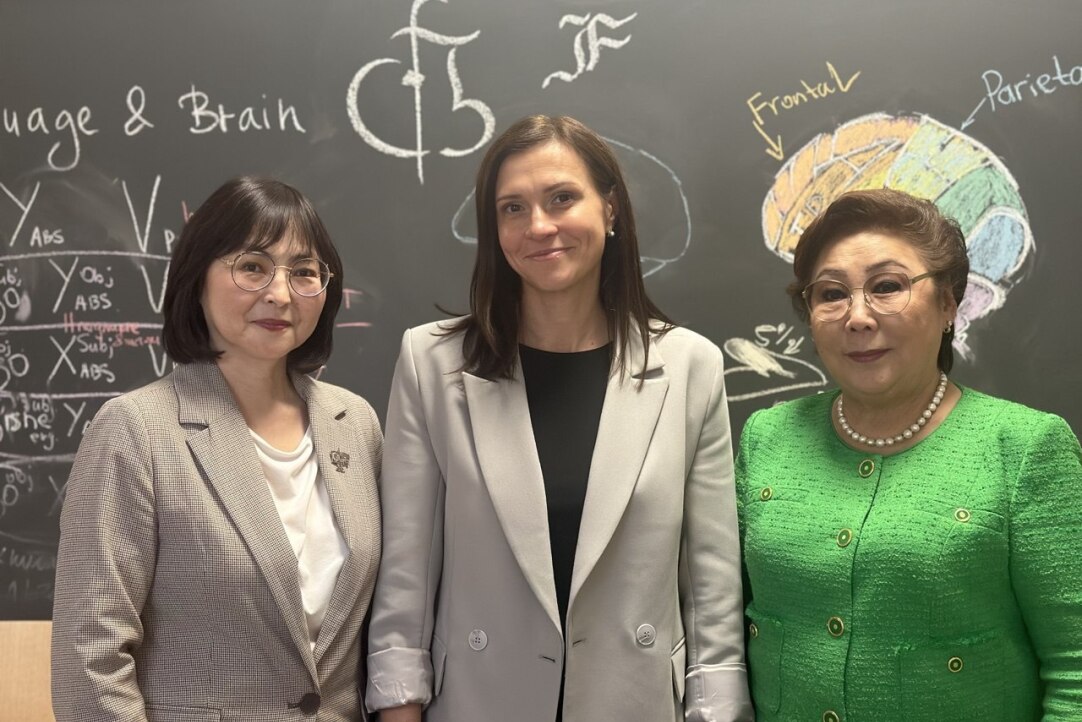
HSE University's Centre for Language and Brain and the Academy of Sciences of the Republic of Sakha (Yakutia) have signed a partnership agreement, opening up new opportunities for research on the region's understudied languages and bilingualism. Thanks to modern methods, such as eye tracking and neuroimaging, scientists will be able to answer questions about how bilingualism works at the brain level.
For several years, researchers at the Centre have been studying how language is processed by speakers of different languages, including Russian, Tatar, Uzbek, as well as Adyghe and other less-studied languages of Russia and the near abroad. The agreement with the Academy of Sciences of the Sakha Republic provides for conducting joint research in this area, sharing knowledge, and launching new research projects related to the study of the region's languages.
Yakutia is a unique region with two state languages, Russian and Yakut, as well as a number of official languages of the indigenous minorities of the North, including Evenki, Even, Yukagir, Dolgan, and Chukchi. According to the 2020 All-Russia Census, the Yakut language is spoken by more than 479,000 people.
One of the areas of joint research between the Centre for Language and Brain and the Academy of Sciences of the Republic of Sakha is how children and adults learn and use different languages, what factors influence language choice in different communicative situations, and how bilingualism changes the structure and functions of the brain.
Together with specialists from Yakutia, neurolinguists from the Centre for Language and Brain are planning to study how language develops in children in monolingual and bilingual environments, as well as in children with speech and language disorders. This will help to understand the mechanisms behind language development and create more effective methods for assessing and correcting language skills.
Nadezhda Vasilyeva, Leading Researcher at the Centre for the Study, Preservation and Development of Native Languages of the Academy of Sciences of the Republic of Sakha, notes, ‘The agreement expands promising research areas, as modern neuroimaging methods will allow us to conduct more fundamental research on the mechanisms of bilingualism formation. Our cooperation will not only strengthen the scientific potential of both sides, but also become the basis for working out methods and technologies for the development of mother tongues and balanced bilingualism. We have planned a joint research expedition this year and are confident that the partnership will be successful and show excellent results.’
Scientists will also analyse how bilinguals read and perceive text in their native language, such as Yakut, and in Russian, and identify the specifics of the cognitive mechanisms involved in reading and comprehension. Such research is important for the development of educational programmes that take into account the specificities of bilingual learning.
Furthermore, digital tools in the Yakut language for the assessment of language and cognitive functions will be developed.
Olga Dragoi, Director of the Language and Brain Centre, notes, ‘The agreement opens up new opportunities for studying language processes in the unique cultural context of Yakutia. We are confident that our joint efforts will allow us not only to advance research, but also to make a significant contribution to the preservation and development of the region's less-studied languages.’
This project will be an important step in the study of linguistic diversity and the promotion of bilingualism in Russia.

See also:

Physicists at HSE University and FIAN Discover Way to 'Photograph' Sound for Testing Materials Used in 6G Communications
Researchers at HSE University, in collaboration with colleagues from the Lebedev Physical Institute of the Russian Academy of Sciences (FIAN), have developed a method for rapidly determining how firmly a film is bonded to a substrate. This is important for the creation of ultrahigh-frequency acoustic filters, which are key components of next-generation 5G and 6G communications. For the first time, researchers have succeeded in measuring the lateral rigidity of the bond between a two-dimensional material film and a substrate in this way. The study results have been published in Applied Physics Letters.
Scientists Create Open Dataset for Studying Concentration
A team of Russian researchers, including scientists from HSE University–St Petersburg, has developed the first open multimodal dataset containing recordings of brain activity, heart function, and video observations to help researchers understand what happens in the human brain during deep concentration. In the future, the dataset could accelerate the development of neural interfaces, rehabilitation technologies, and AI systems. The article has been published in Scientific Data.
Scientists Propose Method for More Efficient Resource Use in Machine Learning
An international group of researchers, including mathematicians from the AI and Digital Science Institute at the HSE Faculty of Computer Science, has provided a theoretical justification for a simple and computationally efficient method of estimating uncertainty in Stochastic Gradient Descent (SGD). The paper has been published on the scientific preprint server arXiv.org and presented at AISTATS 2026.
Team Success: Aligning Means with Objectives
In corporations, sports, and academia, people often face challenges they cannot handle alone. In such cases, selecting the right team is crucial. Tatiana Mayskaya, Associate Professor at the HSE Faculty of Economic Sciences and the International College of Economics and Finance, together with colleagues from foreign universities, examined team characteristics and found that less diverse teams are better suited to objectives where a high average performance is important, whereas more diverse teams are preferable when avoiding failure is critical. The paper has been published in Economic Theory.
Economists Propose More Effective Approach to Reducing Smoking
Economists at HSE University have examined how smokers respond to changes in cigarette prices. When tobacco prices increase, cigarette consumption does not always decline. In fact, spending on tobacco may even rise: according to the researchers, a 1% decrease in cigarette affordability leads to a 0.28% increase in per capita tobacco expenditure. The findings suggest that to reduce smoking rates, tobacco prices must rise faster than household incomes. The study has been published in Voprosy Statistiki.
Biologists Discover Unique Properties of MiR-93-5p MicroRNA in Prostate Cancer
Researchers at the International Laboratory of Microphysiological Systems of the HSE Faculty of Biology and Biotechnology investigated how different isoforms of the same microRNA influence gene function in prostate adenocarcinoma. The study found that in some cases, microRNAs can reinforce each other’s effects by targeting and suppressing the same genes. This finding offers a fresh perspective on the molecular mechanisms underlying tumour development and on the search for disease biomarkers. The results have been published in PeerJ.
HSE Researchers Provide the World’s First Legal Definition of a Digital Ecosystem
Digital ecosystems have evolved from a technological innovation into a fundamental institution of the modern economy over the past few years. According to HSE University’s latest estimates, they account for 8.5% of Russia’s GDP. Previously, no jurisdiction had a statutory definition of what constitutes a digital ecosystem. HSE University researchers have addressed this gap by proposing the first legal concept of a digital ecosystem. Their article, ‘The Digital Ecosystem as a Novel Economic Phenomenon and Legal Concept,’ has been published in the BRICS Law Journal.
HSE Economists Use Search Queries to Forecast Birth Rates
Researchers from the HSE Faculty of Economic Sciences have shown that the accuracy of birth rate forecasts for Russia can be improved by almost 50% by incorporating the dynamics of online search queries related to pregnancy and childbirth into forecasting models. In the best-performing models, the forecasting error fell from 4.6% to 3.2%. The findings have been published in Populations and Economics.
When Looking at Their Own Faces, Men Forget Everything
In an experiment involving 15 healthy men, scientists at HSE University investigated how different phases of the cardiac cycle influence the excitability of the motor cortex when participants viewed either their own photograph or the faces of strangers. The researchers found that when participants looked at their own image, the brain’s response to signals from the heart was weaker, meaning that the influence of cardiac activity on the motor cortex decreased. This finding came contrary to expectations, as self-focused attention was thought to enhance the brain's sensitivity to internal bodily signals. The study has been published in Frontiers in Signal Processing.
HSE Researchers Discover Who Eats Out in Russia—And Why
Around one-third of Russians (31.3%) rarely eat out or buy ready-made meals. The core group of active consumers—those who eat out or purchase prepared food almost every day or several times a week—accounts for only about 9% of the population. These are the findings of a study conducted by the HSE Institute for Social Policy. According to the researchers eating out is no longer a marker of high social status in Russia.