

‘A New World Order Must Be Human-Centred’

The School of International Regional Studies at the HSE Faculty of World Economy and International Affairs (WEIA) held the International Conference ‘The World Majority and the West amid Geoeconomic and Civilisational Transformations.’ This was the seventh time the conference had taken place, bringing together researchers from 13 countries.

In his opening remarks, Dmitry Efremenko, Head of the School of International Regional Studies, stressed that the ‘world majority’ should not be seen as an amorphous conglomerate of actors with sharply differing interests. It consists of several groups of countries that hold most of the world’s population and natural resources and are striving to create a new system of international relations based on mutual respect and recognition of national and regional specificities. According to him, the transformations envisaged by the world majority will result in a new, post-Western world order.

Victoria Panova, HSE Vice Rector, emphasised that since the term ‘world majority’ first appeared, it has gained substance. It is now perceived not as the Global South, but as a group of countries seeking a fairer world order and capable of supporting one another—something that provokes a sharp reaction from the West. The countries of the world majority, she noted, bear a particular responsibility for the fate of the world. Victoria Panova named the collapse of the Western-centred world order and the West’s unwillingness to take into account the interests of other countries as the main reasons for growing global tensions.
‘We are ready for a world order that takes the interests of all countries into account. Current alliances, including BRICS, the SCO, and the G20, can develop the rules so needed by the global community,’ the vice rector stated. She drew attention to the rapid growth of trade between BRICS countries, which outpaces the global average, as well as the gradual move by many states away from the dollar as a settlement currency in interstate trade.
Victoria Panova believes that the consolidation of the world majority is creating the foundations of an international relations system capable of ensuring the prosperity of all countries.
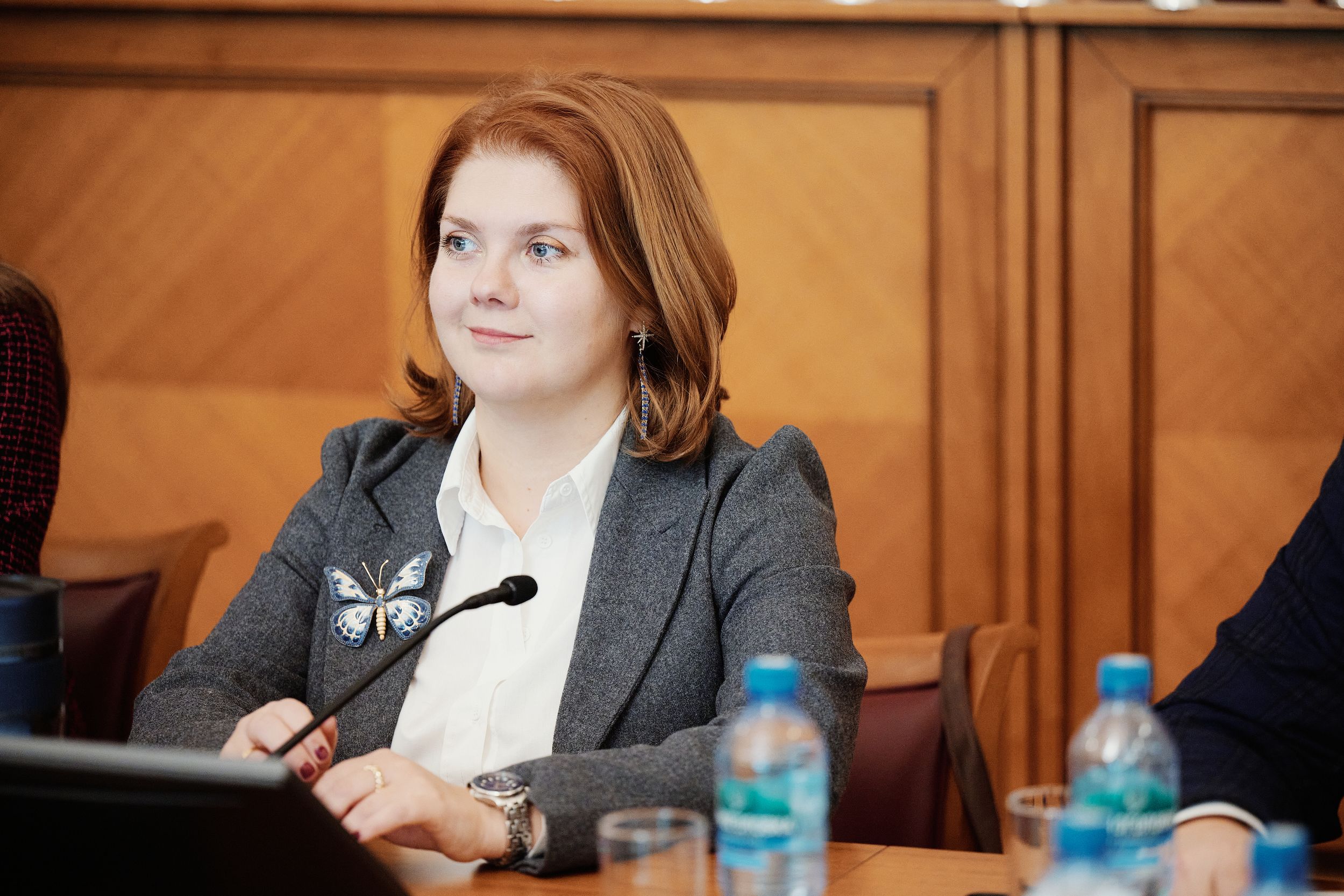
In turn, Anastasia Likhacheva, Dean of the HSE Faculty of World Economy and International Affairs, noted that in the seven years since the first conference on the world majority, the world has undergone profound transformation, and research in international relations has shifted accordingly towards geoeconomics.
She highlighted the critical importance of deep expertise on countries across different regions. Anastasia Likhacheva reminded the audience that HSE has many specialists who regularly visit Asian, African, and Latin American states, study developments on the ground in detail, and are ready to share their knowledge with students and colleagues. The dean added that the current conference features researchers from 13 countries. ‘I am grateful to our international colleagues for the opportunity to check and recalibrate my own picture of the world,’ she said.

Andrey Denisov, First Deputy Chair of the Federation Council Committee on Foreign Affairs and former Russian Ambassador to China, noted that at a time of tectonic shifts in global politics, it is important to understand whether the world majority has recognised itself as an independent force, and whether the unity of the West still holds.

Kirill Babaev, Director of the RAS Institute of China and Contemporary Asia (ICCA), believes that the previous system of international relations has collapsed and a new one is emerging. Current conflicts, he is convinced, will end with negotiations and the establishment of a new international order.
The ICCA Director said that the conference offers an opportunity to express and debate new ideas needed for Russia’s foreign policy. He noted that the term ‘world majority’ has taken root in Chinese academic discourse as well, where the term ‘Global South’ had previously been preferred. Kirill Babaev argues that the shift of the world majority from a purely numerical concept to a practical one is unfolding in parallel with growing contradictions within the West. This, he believes, gives researchers and students the chance to propose unconventional ideas and promote them to policymakers.

Connie Rahakundini Bakrie, Professor at the Faculty of International Relations, St Petersburg State University, pointed out that most of the world’s population and resources lie outside the West, and the events of recent years have shaken the system of international institutions. She is confident that the world majority is building a pluralistic world order in which humanism and self-respect will be the key priorities.

Su Changhe, Dean of the School of International Relations & Public Affairs at Fudan University, described the ‘world majority’ as a highly significant concept and model of world order that helps to better understand the nature of the transformation of global politics. In his view, the world majority aspires to historical justice and the democratisation of the international system. He stressed the importance of continued cooperation between Russia and China, and in particular the deepening of ties between Fudan University and HSE University.

Alexey Kuznetsov, Director of the Institute of Scientific Information for Social Sciences (INION RAS), noted that the conference at which the notion of the world majority had been formulated is evolving together with the development of the world majority itself, reflecting the global shift towards greater fairness for previously oppressed countries. The world is becoming polycentric, he said, and Russia is playing a key role in the ongoing changes.
Sergey Karaganov, Academic Supervisor of the HSE Faculty of World Economy and International Affairs (WEIA), delivered the plenary lecture ‘Where Should Russia Go in a Rapidly Changing World?’ He reminded the audience that the term ‘world majority,’ along with a number of other well-known concepts—including ‘pivot to the East’—originated at HSE. According to Sergey Karaganov, without Russia’s initiative, which after the Soviet Union’s collapse became the informal leader of the world majority, this group of countries would not have been able to free itself from Western dominance. In his view, history and the global order have now returned to their natural course, which was interrupted at the turn of the sixteenth and seventeenth centuries when the West achieved military superiority. In 1917, Russia ‘broke away’ from the West, and from the 1950s onwards the West lost the ability to impose its values by force—something that became evident in the Korean War, the decolonisation of Africa, subsequent conflicts in the Middle East, and the Vietnam War.
The WEIA Academic Supervisor argues that the world majority has not yet fully taken shape, and is unlikely to become formally established any time soon, but its institutional foundations have already been created. To continue building a new system of international relations, he said, it is necessary to develop parallel institutions, above all financial and economic ones.

Another challenge identified by Sergey Karaganov is the West’s dominance in intellectual production and the media. Even leaders and members of the intellectual elites in many countries start their day by consulting Western media. He stressed the importance of uniting universities and intellectuals from world-majority countries to fill the intellectual vacuum and counter Western narratives.
He is convinced that Russian scholars, together with colleagues from other countries, must lay the foundations for a new system of international relations and the global economy. Intellectuals, he said, need to reflect on what might replace the currently dominant form of capitalism, which no longer drives development and has lost its ethical foundations by focusing on ever-growing consumption. This growth is increasingly at odds with the interests of humanity. For example, rising carbon emissions have been a direct result of excessive consumption.
In Sergey Karaganov’s view, a new world order must be human-centred, placing the benefit of society and the individual at its core—although this should differ from Western individualism. A shift towards human-centrism means prioritising people’s spiritual, cultural, physical, and ethical development, rather than their wealth, as well as emphasising the security of the individual and society.
‘We must strive to ensure that more countries culturally close to us join the world majority. We should not forget the achievements of the West or reject the capital accumulated during its period of dominance; we must make use of it while pursuing our own path,’ Sergey Karaganov concluded.
The discussion of the report featured contributions from Olga Volosyuk, Academic Supervisor of the HSE School of International Regional Studies; Vasily Kuznetsov, Deputy Director of the Institute of Oriental Studies, RAS; and HSE University Master’s student Nabu Salah.
The conference continued with thematic regional sessions.

See also:

‘The Peak of Stupidity’ and ‘The Valley of Despair’: HSE Economists Propose an Explanation for the Dunning–Kruger Effect
The Dunning–Kruger effect, which describes a sharp surge in self-confidence among beginners followed by an equally rapid decline as they gain experience, can be explained by the nature of the learning process and the acquisition of new knowledge. This conclusion was reached by Andrey Vorchik of the HSE Faculty of Economic Sciences together with independent researcher Murat Mamyshev. They developed a mathematical model of learning and demonstrated how subjective confidence is formed and changes as knowledge accumulates, as well as how teachers can reduce the ‘valley of despair’ experienced by learners.
Advancing Collaboration: HSE Faculty of Computer Science and Harbin Institute of Technology Hold Joint Seminar
From July 13 to 16, 2026, the Faculty of Computer Science hosted the Russian–Sino Research Seminar on Machine Learning Applications, organised by the HSE Laboratory for Cloud and Mobile Technologies in partnership with the Harbin Institute of Technology (China). A delegation comprising seven students and three university representatives travelled to Moscow to take part in an intensive four-day programme.
HSE and Karakalpak State University Agree on Cooperation
HSE University and Berdakh Karakalpak State University have signed a cooperation agreement to strengthen collaboration in research, education, and innovation. Through the expertise of its Сentre of Digital Technologies for Nature-Based Solutions of the Carbon Measurement Supersites Programme, HSE University will work with colleagues from Uzbekistan to assess climate risks and evaluate opportunities for implementing nature-based climate projects in the region. The partners also plan to develop joint research and educational programmes.
‘We Are Always Open to Collaboration, and China Is One of Our Most Important Partners’
From July 20 to 27, 2026, the HSE Faculty of Urban and Regional Development (FURD) is hosting a summer school for students from Tianjin University dedicated to the preservation of cultural heritage. Throughout the week, participants have attended lectures, practical workshops, and field visits to some of Moscow’s most iconic heritage sites. The summer school is the faculty’s first international programme of this kind and forms part of the expanding educational cooperation between Russia and China.
Physicists at HSE University and FIAN Discover Way to 'Photograph' Sound for Testing Materials Used in 6G Communications
Researchers at HSE University, in collaboration with colleagues from the Lebedev Physical Institute of the Russian Academy of Sciences (FIAN), have developed a method for rapidly determining how firmly a film is bonded to a substrate. This is important for the creation of ultrahigh-frequency acoustic filters, which are key components of next-generation 5G and 6G communications. For the first time, researchers have succeeded in measuring the lateral rigidity of the bond between a two-dimensional material film and a substrate in this way. The study results have been published in Applied Physics Letters.
HSE University and Peking University Expand Their Partnership
Peking University President Gao Song paid his first visit to HSE University as part of his first overseas trip since taking office in May 2026. The main purpose of the talks was to consolidate existing areas of cooperation and expand joint projects between HSE University and Peking University within the framework of the Cross Years of Russia–China Cooperation in Education (2026–2027).
Biologists Discover Unique Properties of MiR-93-5p MicroRNA in Prostate Cancer
Researchers at the International Laboratory of Microphysiological Systems of the HSE Faculty of Biology and Biotechnology investigated how different isoforms of the same microRNA influence gene function in prostate adenocarcinoma. The study found that in some cases, microRNAs can reinforce each other’s effects by targeting and suppressing the same genes. This finding offers a fresh perspective on the molecular mechanisms underlying tumour development and on the search for disease biomarkers. The results have been published in PeerJ.
Researchers Discover How Spelling Errors Slow Down Reading in Russian
Psycholinguists from the Centre for Language and Brain at HSE University–St Petersburg have shown that words that are frequently misspelled are processed more slowly by readers, even when presented with the correct spelling. The researchers confirmed this effect for the first time using Russian-language materials and found that response speed is most strongly linked to how confidently individuals can distinguish the correct spelling of a word from an incorrect one. The study has been published in The Mental Lexicon.
HSE Economists Reveal How the Wage Gap Emerges Among Vocational School Graduates
HSE researchers examined the careers of 600,000 graduates of Russian secondary vocational education programmes and found that at the start of their careers, the gender wage gap reaches 23%, doubling after three years. This disparity is largely due to male and female students choosing different occupations when enrolling in vocational schools. These were the findings made by Sergey Roshchin, Natalya Yemelina, and Ksenia Rozhkova from of the HSE Faculty of Economic Sciences. The article has been published in Educational Studies.
HSE Researchers Make Aldehydes Perform Dual Function
Chemists from HSE University have discovered a way to carry out a reductive addition reaction without using an external reducing agent. Instead, the required 'resource' is supplied by the aldehyde itself, one of the reaction participants. This approach helps prevent unwanted side reactions, reduces toxicity, and simplifies the production and synthesis of organic molecules, including those used in the manufacture of medicines. The study has been published in Journal of Catalysis.