

Sber Opens Educational Space at HSE University

On September 12, 2025, a new Sber classroom was unveiled at HSE’s Pokrovsky Bulvar campus. The venue will host lectures and project seminars, and in their free time, students will be able to use it as a co-working area or as a platform for their own events—from film screenings to intellectual debates.
The opening day featured a student festival where guests tested smart devices, took VR tours of a digital home, and met teams from various Sber divisions. Students learnt about AI-related professions, received career advice from experts, and discovered joint educational programmes run by the bank and HSE University.
Dzhangir Dzhangirov, Senior Vice President and Chief Risk Officer at Sber, gave a lecture on how artificial intelligence algorithms help enhance the bank’s decision-making system.

Natalia Dudina
‘We are creating spaces that reflect Sber’s cultural code to open doors for students—to new opportunities, new connections, and to self-discovery. I believe that this new classroom will give rise to outstanding teams and projects,’ said Natalia Dudina, Senior Vice President, HR Senior Managing Director, and Head of Culture at Sber.
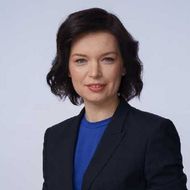
Irina Martusevich
‘Sber has been a strategic partner of HSE University for many years,’ noted Irina Martusevich, HSE Vice Rector. ‘Together, we have been implementing research, student, and educational projects. With the opening of the Sber classroom on Pokrovsky Bulvar, another major joint initiative—this time an infrastructural one—has been completed. We are confident that this modern and comfortable space will encourage productive student work, foster creative thinking, and become a new focal point for the development of our partnership with Sber.’
The partnership between Sber and HSE University began in 2017 with the launch of the Master’s programme in Financial Technologies and Data Analysis. In 2022, the Joint Department with Sberbank ‘Financial Technologies and Data Analysis’ was established at the Faculty of Computer Science, and in 2024, the AI360 Bachelor’s programme—designed for future researchers and developers in artificial intelligence—was launched in collaboration with Yandex.

See also:

Biologists Discover 'Molecular Fingerprint' of Preeclampsia
Researchers at HSE University employed a new method to model hypoxia in placental cells during pregnancies complicated by preeclampsia and identified molecular markers of tissue hypoxia. Since hypoxia is one of the key mechanisms underlying preeclampsia, these findings are important for a more accurate and timely diagnosis of the disease and for the development of effective treatment methods. The paper has been published in Placenta.
‘Hedgehog’ Versus ‘Relatives’: Researchers Measure How the Brain Responds to Unexpected Words During Natural Speech
Russian neurophysiologists, including researchers from HSE University, have demonstrated the feasibility of using event-related fields (ERFs) to study brain activity during natural speech perception. The researchers showed that this approach can be applied not only to individual words but also to continuous speech. Their findings indicate that words whose meanings differ significantly from the preceding context require longer processing times. The study also reveals that the brain processes function words in two stages: first, it identifies their grammatical role and then uses this information to predict the next word. The study has been published in Frontiers in Human Neuroscience.
Physicists Discover What Happens Inside a Stable Vortex
Large vortices with characteristic spiral arms are often observed in the atmosphere and the ocean. Physicists from HSE University have explained how these structures form and why they retain their shape. The researchers found that velocities at points located along the same vortex arc remain correlated even over long distances. At the same time, this correlation weakens rapidly with increasing distance from the vortex centre. These differences help explain the formation of spiral arms and may improve models of atmospheric and oceanic currents. The findings have been published in Physical Review Fluids.
‘The Peak of Stupidity’ and ‘The Valley of Despair’: HSE Economists Propose an Explanation for the Dunning–Kruger Effect
The Dunning–Kruger effect, which describes a sharp surge in self-confidence among beginners followed by an equally rapid decline as they gain experience, can be explained by the nature of the learning process and the acquisition of new knowledge. This conclusion was reached by Andrey Vorchik of the HSE Faculty of Economic Sciences together with independent researcher Murat Mamyshev. They developed a mathematical model of learning and demonstrated how subjective confidence is formed and changes as knowledge accumulates, as well as how teachers can reduce the ‘valley of despair’ experienced by learners.
Physicists at HSE University and FIAN Discover Way to 'Photograph' Sound for Testing Materials Used in 6G Communications
Researchers at HSE University, in collaboration with colleagues from the Lebedev Physical Institute of the Russian Academy of Sciences (FIAN), have developed a method for rapidly determining how firmly a film is bonded to a substrate. This is important for the creation of ultrahigh-frequency acoustic filters, which are key components of next-generation 5G and 6G communications. For the first time, researchers have succeeded in measuring the lateral rigidity of the bond between a two-dimensional material film and a substrate in this way. The study results have been published in Applied Physics Letters.
Biologists Discover Unique Properties of MiR-93-5p MicroRNA in Prostate Cancer
Researchers at the International Laboratory of Microphysiological Systems of the HSE Faculty of Biology and Biotechnology investigated how different isoforms of the same microRNA influence gene function in prostate adenocarcinoma. The study found that in some cases, microRNAs can reinforce each other’s effects by targeting and suppressing the same genes. This finding offers a fresh perspective on the molecular mechanisms underlying tumour development and on the search for disease biomarkers. The results have been published in PeerJ.
Researchers Discover How Spelling Errors Slow Down Reading in Russian
Psycholinguists from the Centre for Language and Brain at HSE University–St Petersburg have shown that words that are frequently misspelled are processed more slowly by readers, even when presented with the correct spelling. The researchers confirmed this effect for the first time using Russian-language materials and found that response speed is most strongly linked to how confidently individuals can distinguish the correct spelling of a word from an incorrect one. The study has been published in The Mental Lexicon.
HSE Economists Reveal How the Wage Gap Emerges Among Vocational School Graduates
HSE researchers examined the careers of 600,000 graduates of Russian secondary vocational education programmes and found that at the start of their careers, the gender wage gap reaches 23%, doubling after three years. This disparity is largely due to male and female students choosing different occupations when enrolling in vocational schools. These were the findings made by Sergey Roshchin, Natalya Yemelina, and Ksenia Rozhkova from of the HSE Faculty of Economic Sciences. The article has been published in Educational Studies.
HSE Researchers Make Aldehydes Perform Dual Function
Chemists from HSE University have discovered a way to carry out a reductive addition reaction without using an external reducing agent. Instead, the required 'resource' is supplied by the aldehyde itself, one of the reaction participants. This approach helps prevent unwanted side reactions, reduces toxicity, and simplifies the production and synthesis of organic molecules, including those used in the manufacture of medicines. The study has been published in Journal of Catalysis.
HSE Scientists Develop Method to Compress Large Language Models Without Losing Quality
Researchers from the AI and Digital Science Institute at the HSE Faculty of Computer Science have developed a new compression method for large language models such as GPT and LLaMA that reduces their size by 25–36% without additional training or significant loss of accuracy. This is the first approach to use mathematical transformations—specifically, rotations of model weights—to make models more amenable to compression with structured matrices. The study results have been published in ACL Findings 2025. The code is available on GitHub.