

Recommender Systems: New Algorithms and Current Practices

The AI and Digital Science Institute at the HSE Faculty of Computer Science hosted a conference focused on cutting-edge recommender system technologies. In an atmosphere of active knowledge sharing among leading industry experts, participants were introduced to the latest advancements and practical solutions in recommender model development.
The conference brought together experts in the development of recommender systems—a promising technology with applications in both academia and industry. The conference was organised by the Laboratory for Matrix and Tensor Methods in Machine Learning headed by Maxim Rakhuba.

Evgeniy Frolov
According to Evgeniy Frolov, Senior Research Fellow at the laboratory and Head of the Personalisation Technologies Group at AIRI, 'The second iteration of the Recommender Systems Conference brought together a community of industry and academic experts, highlighting both a strong technological foundation and a growing interest in the field. The conference programme covered a wide range of topics, from recent research submitted to RecSys 2025—the leading conference on recommender systems—to in-depth reviews of production architectures used by major companies. A notable highlight was the roundtable discussion on how well-tuned single-stage solutions could serve as a stepping stone toward a unified, LLM-oriented recommender paradigm. From my perspective, the main outcome of the conference is the emergence of a community of industry and academic experts that enables honest hypothesis testing on real-world data and provides immediate insight into its value for both business and science.'
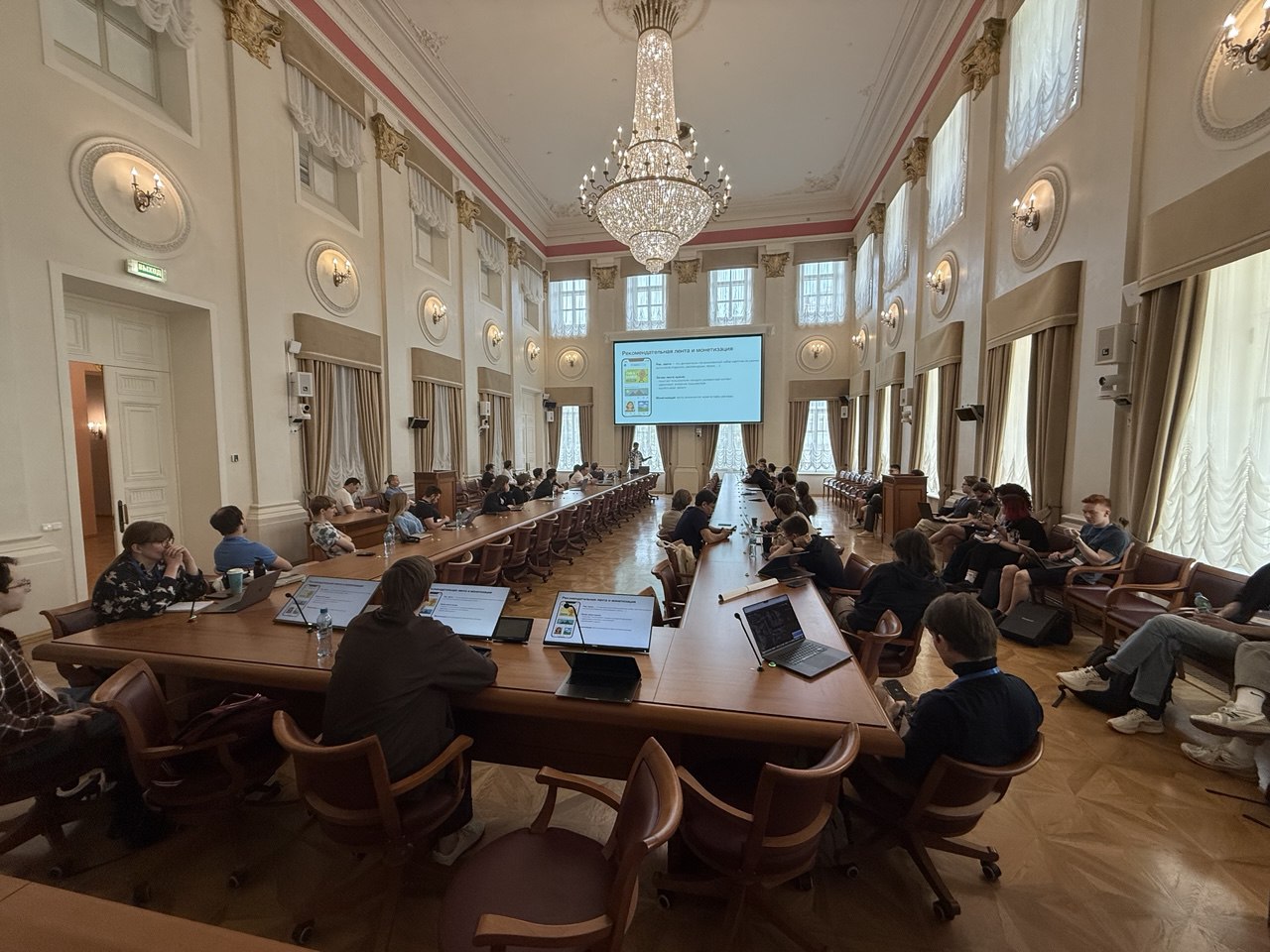
At a training seminar held during the conference, AI researchers Gleb Mezentsev and Danil Gusak provided a detailed overview of modern approaches to building scalable and consistent recommender systems. Participants explored the latest approaches to building efficient data pipelines for processing large amounts of data, as well as the complexities of integrating recommender solutions into real-world business processes.
Sergey Ermilov, Senior Developer at VK AI, presented research findings on the impact of advertising integrations on recommender service effectiveness and outlined successful strategies for content relevance and advertising returns.
Ruslan Israfilov, Sber RecSys Team Leader, delivered a presentation titled 'The Next Step in AI Evolution: LLM-based Multi-Agent Systems,' highlighting the benefits of integrating multiple intelligent agents to improve recommendation accuracy and better understand user behaviour.

Marina Ananyeva
Marina Ananyeva, Head of RecSys at the Laboratory for Matrix and Tensor Methods in Machine Learning, discussed the shift from traditional batch learning methods to online recommender models. She presented practical cases illustrating the transition to online learning, underscoring how models adapt more quickly to changes in audience preferences.
Alexey Vasilev, Executive Director of Data Science at the Sber AI Lab, emphasised the critical role of proper data preparation in developing high-quality recommender systems. His presentation covered topics such as model architecture selection, training process optimisation, and algorithm result interpretation. 'The conference was attended by experts from leading Russian companies. I know many of the speakers personally, so it was a pleasure to reconnect,' says Alexey Vasilev. 'The excellent variety of presentations—from both industry and academia—along with the poster session, made the event truly interesting. It was great to see the discussions continue during the breaks, once again confirming that recommender systems are a highly relevant and in-demand topic. I believe the conference was a success.'
In his presentation, Evgeniy Frolov proposed an innovative approach to enhancing recommender system performance by dynamically adjusting the structure of internal data representations—a method that can significantly improve recommendation quality and reduce the likelihood of errors. 'At the conference, I presented our new paper introducing a self-supervised approach to training recommender models. We adapted the Barlow Twins method, originally developed in the field of computer vision, for transformer-based recommender architectures. In particular, beyond improving prediction quality, we were the first to identify the effect of adaptive collapse in representations: depending on the structure of user preferences, the algorithm automatically adjusts the diversity of its outputs. In datasets without clear clusters of user tastes, it generates a broad range of recommendations, while in scenarios with strictly defined, specific preferences, it focuses on the most relevant products—delivering more accurate choices compared to existing methods,' explains Frolov.
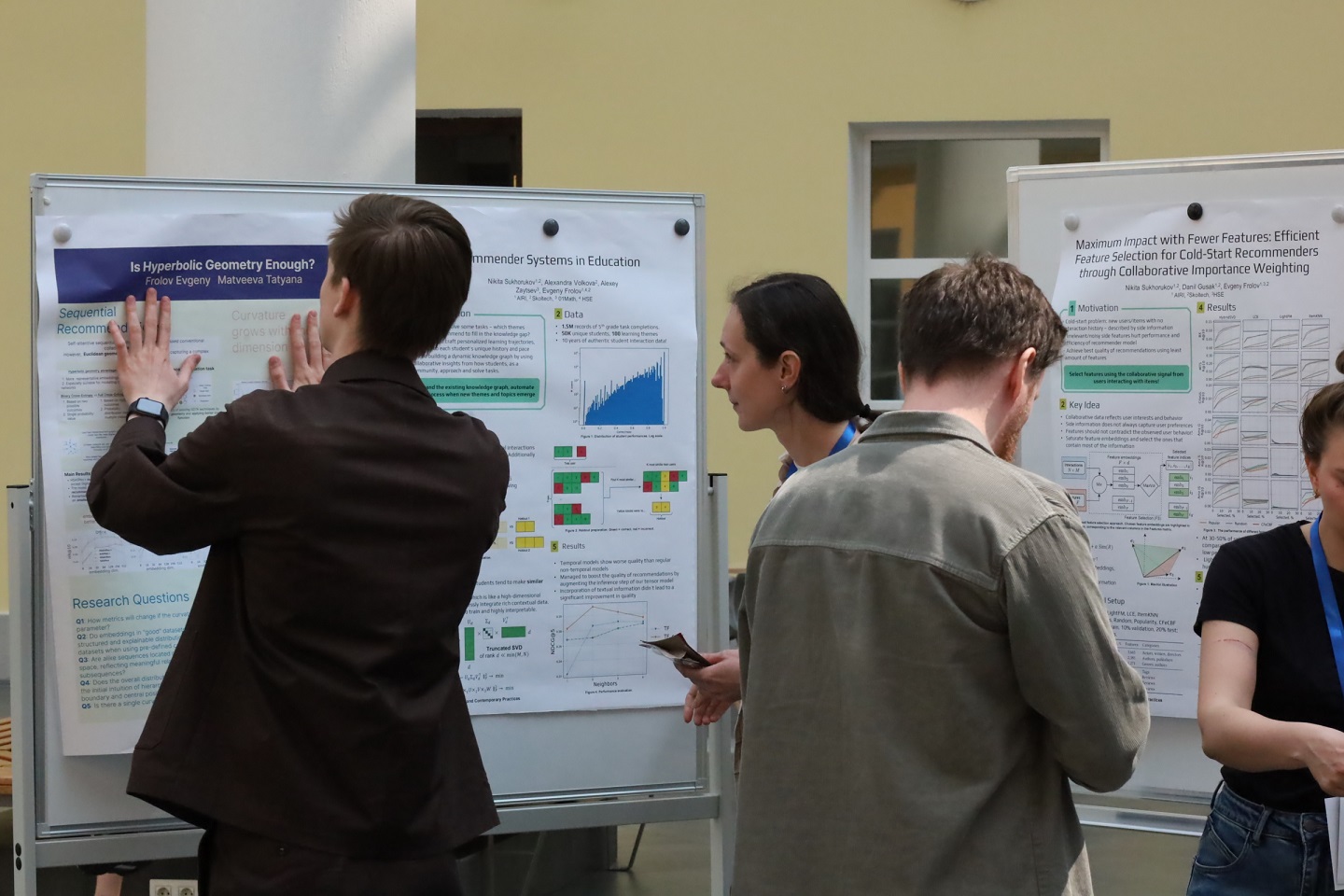
The conference concluded with a poster session in the atrium of HSE University's building on Pokrovsky Bulvar, where participants discussed the presented research in an informal setting and exchanged ideas on emerging directions in recommender technology development.
This was the second Conference on Recommender Systems hosted by HSE University, and it is becoming a key platform for discussing scientific breakthroughs and technological innovations in AI and the digital economy. The event contributes to the advancement of the recommender systems industry and the emergence of a new generation of professionals in the field.

See also:

Biologists Discover Unique Properties of MiR-93-5p MicroRNA in Prostate Cancer
Researchers at the International Laboratory of Microphysiological Systems of the HSE Faculty of Biology and Biotechnology investigated how different isoforms of the same microRNA influence gene function in prostate adenocarcinoma. The study found that in some cases, microRNAs can reinforce each other’s effects by targeting and suppressing the same genes. This finding offers a fresh perspective on the molecular mechanisms underlying tumour development and on the search for disease biomarkers. The results have been published in PeerJ.
Researchers Discover How Spelling Errors Slow Down Reading in Russian
Psycholinguists from the Centre for Language and Brain at HSE University–St Petersburg have shown that words that are frequently misspelled are processed more slowly by readers, even when presented with the correct spelling. The researchers confirmed this effect for the first time using Russian-language materials and found that response speed is most strongly linked to how confidently individuals can distinguish the correct spelling of a word from an incorrect one. The study has been published in The Mental Lexicon.
Scientists Discover Why Europium 'Misbehaves'
Europium is a rare-earth metal responsible for the pure red glow in displays and other luminescent materials. For a long time, however, it refused to emit light when surrounded by certain organic molecules known as acylpyrazolone ligands. Chemists have now uncovered the reason: in europium complexes with these ligands, a 'black window' appears—a charge-transfer state in which the energy absorbed by the ligand is dissipated as heat rather than emitted as light. Understanding this mechanism opens the way to designing more efficient red-emitting materials for displays, fluorescent thermometers, and chemical sensors. The results have been published in Dalton Transactions.
HSE Economists Reveal How the Wage Gap Emerges Among Vocational School Graduates
HSE researchers examined the careers of 600,000 graduates of Russian secondary vocational education programmes and found that at the start of their careers, the gender wage gap reaches 23%, doubling after three years. This disparity is largely due to male and female students choosing different occupations when enrolling in vocational schools. These were the findings made by Sergey Roshchin, Natalya Yemelina, and Ksenia Rozhkova from of the HSE Faculty of Economic Sciences. The article has been published in Educational Studies.
HSE Researchers Make Aldehydes Perform Dual Function
Chemists from HSE University have discovered a way to carry out a reductive addition reaction without using an external reducing agent. Instead, the required 'resource' is supplied by the aldehyde itself, one of the reaction participants. This approach helps prevent unwanted side reactions, reduces toxicity, and simplifies the production and synthesis of organic molecules, including those used in the manufacture of medicines. The study has been published in Journal of Catalysis.
HSE & VK Engineering and Mathematics School Showcases 13 Projects at 10th Demo Day
The 10th Demo Day of the Joint HSE & VK Engineering and Mathematics School was held at the VK Moscow office. Students of the three workshops presented the results of 13 projects in the fields of artificial intelligence, information security, and digital platforms. Students worked on the development of recommendation services, systems for psycholinguistic text analysis and speech processing, methods for identifying celebrities in videos, algorithms for determining the toxicity of memes, security mechanisms for AI systems, and approaches to improving the effectiveness of neural network models.
Tabular Data Anonymisation Solution for Safe Use in AI Systems Developed at HSE University
The AI and Digital Science Institute at the HSE Faculty of Computer Science has developed a tabular data anonymisation service designed to prepare corporate datasets for use in analytics and AI applications. The solution can identify personal data in structured datasets, apply consistent and reproducible anonymisation rules, and generate the artifacts required for quality control, auditing, and subsequent use of data in secure environments.
HSE Scientists Develop Method to Compress Large Language Models Without Losing Quality
Researchers from the AI and Digital Science Institute at the HSE Faculty of Computer Science have developed a new compression method for large language models such as GPT and LLaMA that reduces their size by 25–36% without additional training or significant loss of accuracy. This is the first approach to use mathematical transformations—specifically, rotations of model weights—to make models more amenable to compression with structured matrices. The study results have been published in ACL Findings 2025. The code is available on GitHub.
Machine Learning Models Can Help Reduce Volatility and Boost Stock Market Returns
The use of machine learning models makes it possible to achieve greater accuracy in predicting risks in the Russian stock market compared to classical econometric approaches. The predictive power of these models increases by 23%, while the average investor’s return can reach up to 13% per annum. These conclusions were drawn by Nikita Lysenok from the Department of Financial Market Infrastructure at the HSE Faculty of Economic Sciences. The paper has been published in Fundamental and Applied Mathematics.
HSE Study Reveals Imbalance in the Generative AI Market
Researchers at HSE University analysed how effectively the global generative artificial intelligence market converts investment into real revenue, concluding that AI is currently developing faster than it is paying off. The results have been published in the journal Foresight and STI Governance.